
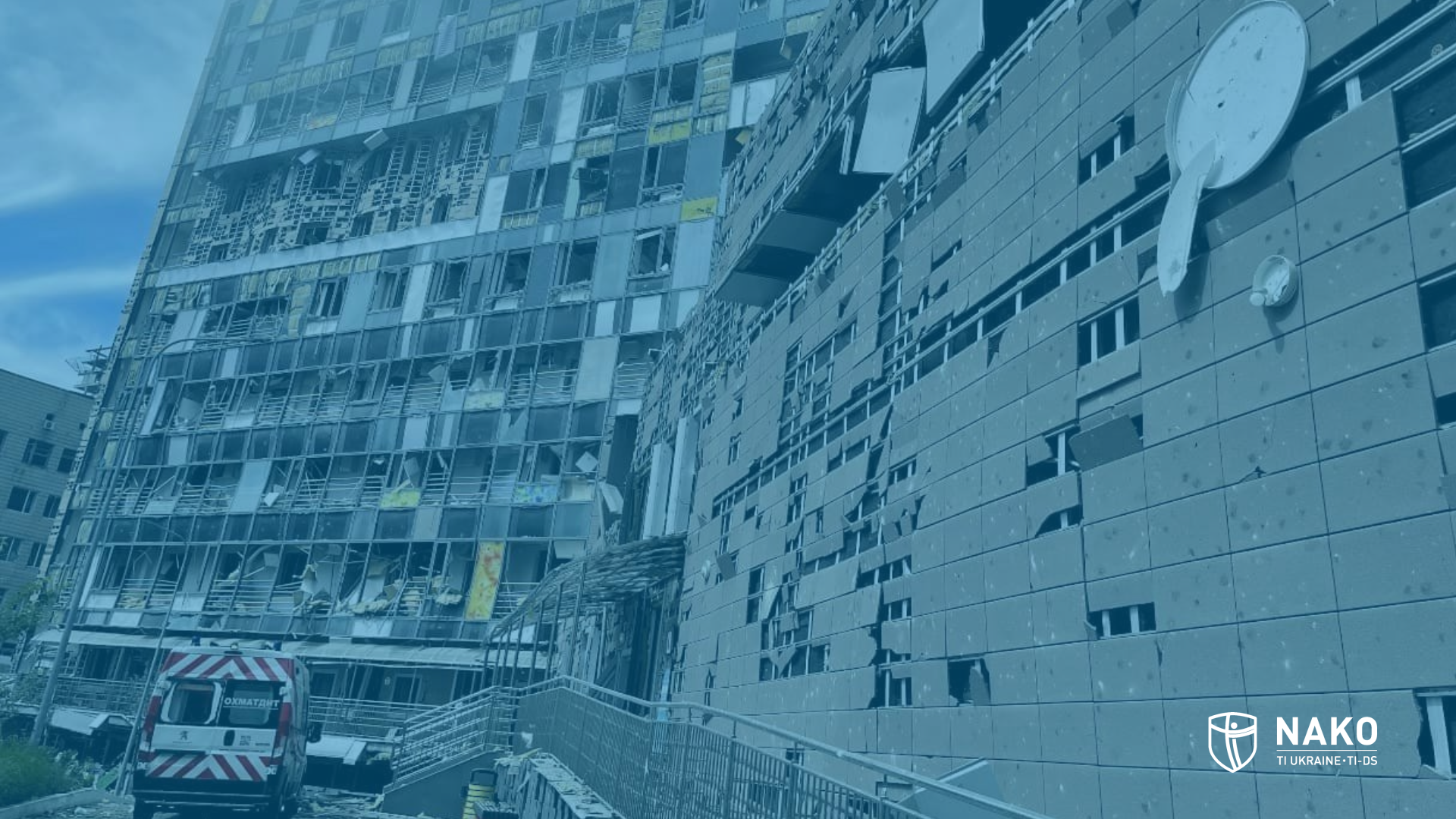
The Kh-101 is a high-precision guided missile that is considered one of the most advanced in service in Russia. According to analysts, it has an accuracy range of five to six meters, and its flight path requires individual planning from the launch site to the target. Russia has increased production of this type of missile eightfold – from 56 missiles in 2021 to 420 in 2023.
According to the Financial Times, the Kh-101 missile that Russia used to hit Okhmatdyt Children’s Hospital may have more than 50 Western-made parts. There is currently no evidence that any major suppliers have violated sanctions, but the components may be resold by intermediaries from third countries, the newspaper writes.
This is not the first time that Russia has attacked civilian targets in Ukraine with Kh-101 cruise missiles. For example, in August 2022, the Russians hit a residential complex in Odesa. Eight people died as a result of this attack. NAKO and IPHR experts studied the circumstances of this and nine other massive missile attacks by the Russian Federation, as well as the presence of Western components in Russian weapons, in the study "Enabling War Crimes? Western-Made Components in Russia's War Against Ukraine".
Even then, referring to the report by RUSI (a British think tank specializing in international security and military affairs), NAKO emphasized that the Kh-101 had components from the United States, the Netherlands, Switzerland, and Taiwan. These include, for example, circuits, microprocessors, switches, memory, and generators.
Information about the presence of Western components in Russian missiles was once again confirmed in our report "Globalization, Weaponized: Foreign Components in Weapons and Equipment Used by the Russian Army".
Western components in Russian weapons are a systemic problem. Despite international sanctions and export controls, they continue to enter Russia. And Russia is ready to pay any price for components for its weapons, as its dependence on modern Western technologies is enormous. Therefore, it is not enough to impose sanctions: it is necessary to closely monitor their compliance, track the supply chains used by Russia, and constantly update the sanctions policy to ensure that it remains effective.
"Western partners regularly impose sanctions on more and more intermediary companies that provide Russia with microelectronics imports. However, one sanctioned Chinese company may be followed by three new ones in Hong Kong, Thailand, or Kyrgyzstan. Therefore, it is obvious that the sanctions policy requires new solutions that would affect specific business sectors and financial institutions in such exporting countries," concludes NAKO Senior Researcher Victoria Vyshnivska.
Photo by Okhmatdyt Children’s Hospital
