
On 8 July 2024, in one of the largest air attacks since the launch of Russia’s full-scale invasion of Ukraine, the Russian Armed Forces launched dozens of air strikes on multiple Ukrainian cities, resulting in significant civilian casualties and widespread destruction.
Between 10:00 and 11:00 EEST (UTC+3), Russian forces fired 38 missiles at Ukraine, of which 30 were shot down by the Ukrainian Air Defence Forces. However, eight missiles struck civilian targets in Kyiv, Dnipropetrovsk Oblast, and Donetsk Oblast. According to information provided by Ukrainian authorities as of 10 July 2024, the attack resulted in a total of 45 civilians being killed (34 in Kyiv, including five chidlren; and 11 in Dnipropetrovsk Oblast) and 185 wounded (121 in Kyiv and Kyiv Oblast; and 64 in Dnipropetrovsk Oblast). Additionally, three civilians were killed in the town of Pokrovsk in Donetsk Oblast. Ukrainian President Volodymyr Zelenskiy reported extensive damage to over 100 buildings, including critical infrastructure such as the children’s hospital and maternity hospital in Kyiv, business centres, and residential areas.
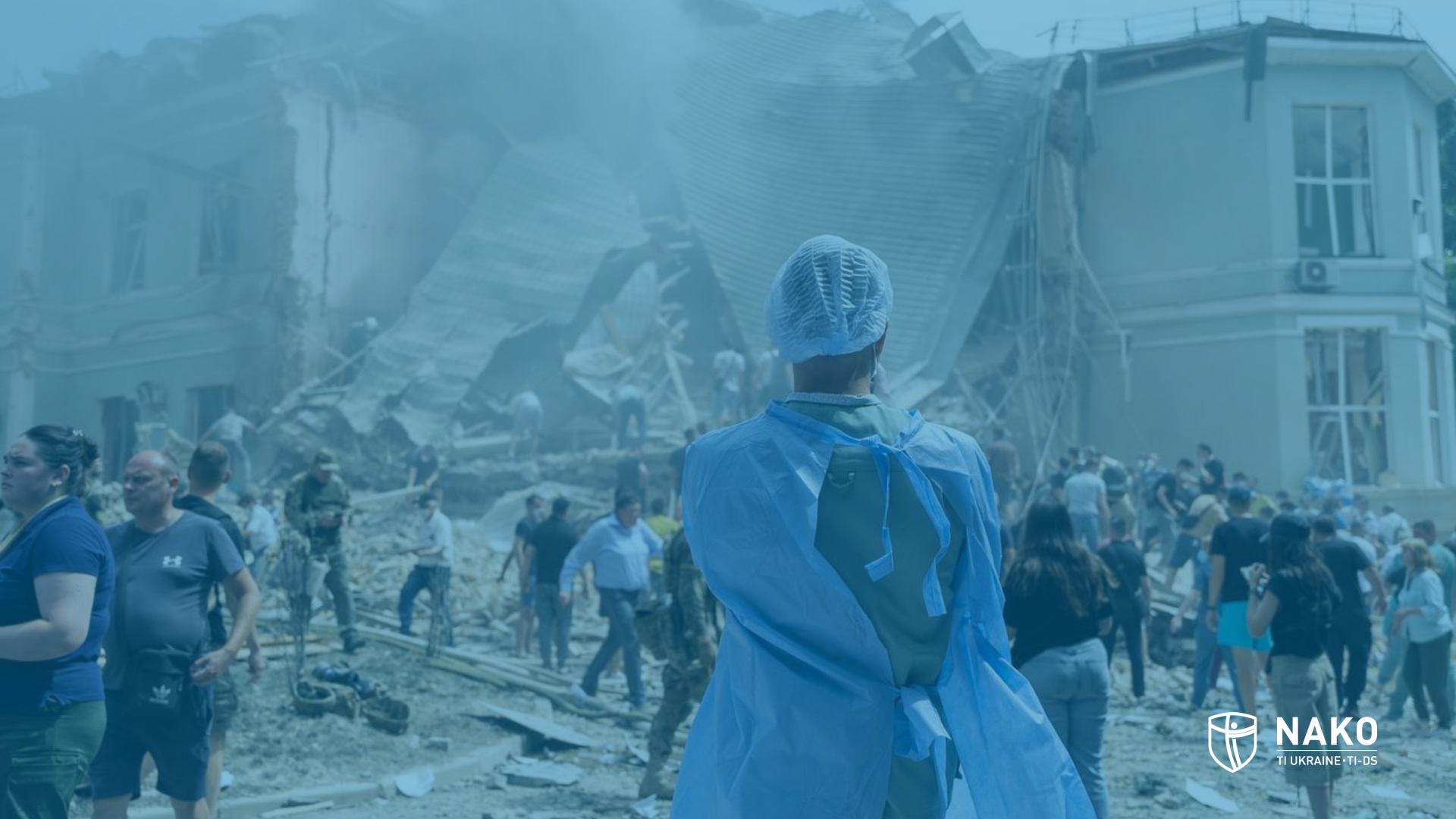
The attack on Okhmatdyt Children’s Hospital in Kyiv: Among other civilian objects, Russian forces targeted Okhmatdyt Children’s Hospital, Ukraine’s largest paediatric facility. According to information provided by the Ukrainian government, available as of 22:46 EEST on 8 July, the attack killed one member of the hospital staff and the relative of a patient. It injured over 50 other civilians, including seven children, with four requiring hospitalisation. Six civilians remain in serious condition. Significant damage was inflicted on five hospital units, including the children’s dialysis unit, intensive care units, and the only oncology and haematology laboratory in the country. Commenting on the attack, one of the parents, whose child was treated at the hospital, said, ‘There were so many families like us, who had their own personal war with oncology already.’ Approximately 600 patients had to be evacuated, with more than 100 transferred to other healthcare facilities.
Information on weapons used in the attack: Russian forces used a variety of missiles, including four Iskander-M ballistic missiles, 13 Kh-101 cruise missiles, and 14 Kalibr cruise missiles, among others.
The Security Service of Ukraine confirmed that the attack on Okhmatdyt Children’s Hospital was carried out with a Kh-101 strategic cruise missile. The Kh-101 is a high-precision guided missile. It uses a satellite navigation system for trajectory correction and has an accuracy range of five to six metres. It requires customised individual pre-flight planning, including simulation of the complete flight path from the launch site to the target. Ukrainian governmental and other military experts are certain that Russia intentionally targeted the hospital, taking into account the type of weapon, its trajectory, and the nature of the damage. According to Lieutenant General Ihor Romanenko, former deputy head of the General Staff of the Ukrainian Armed Forces, the objective was to exert moral and psychological pressure on Ukrainians to agree to Kremlin-proposed conditions for a ceasefire. Some of the attacks were carried out from deep within Russian territory, where Ukraine is restricted from using Western weapons to strike Russian aircraft attacking Ukraine.
Tentative legal qualification: Hospitals and medical objects enjoy special protection during armed conflict and may in no circumstances form the object of an attack. Attacks against civilian objects including hospitals constitute grave breaches of international humanitarian law (IHL) and war crimes under the Rome Statute of the International Criminal Court. Moreover, this Russian attack on a children’s hospital breached an IHL norm requiring children to be the object of special respect and protection against any form of indecent assault. Finally, the massive attacks on other locations in Ukraine also infringed upon the general protection of civilians and civilian objects provided by IHL and are prosecutable under the Rome Statute as war crimes.
The role of Western-made components: The report Enabling War Crimes? Western-Made Components in Russia’s War Against Ukraine reveals that Kh-101 missiles, one of which was used to attack the children’s hospital, have been found to contain Western-made components. Iskander and Kalibr missiles, used by Russia to attack other civilian infrastructure on 8 July, have likewise been found to contain Western-made components.
NAKO and IPHR once again urge Western businesses and governments to tighten their existing sanctions / export control measures and enhance their due diligence, ‘know your customer’, and end-user surveillance. Stakeholders should recognise and acknowledge that their products are being used to commit atrocities and take immediate action to address export control loopholes used by Russia to continue terrorising Ukrainian civilians.
Additionally, NAKO and IPHR urge Western governments to lift the prohibition on the use of their long-range weapons to strike Russian aircraft that attack Ukraine from deep within Russian territory. This is the only means the Ukrainian Armed Forces have to protect civilians from Russian strikes.
Simon Papuashvili, Programme Director, IPHR
Olena Tregub, Executive Director, NAKO
Statement by NAKO and IPHR
In the photo: Okhmatdyt Children’s Hospital after a Russian missile attack. Source: Kyiv City Military Administration
