

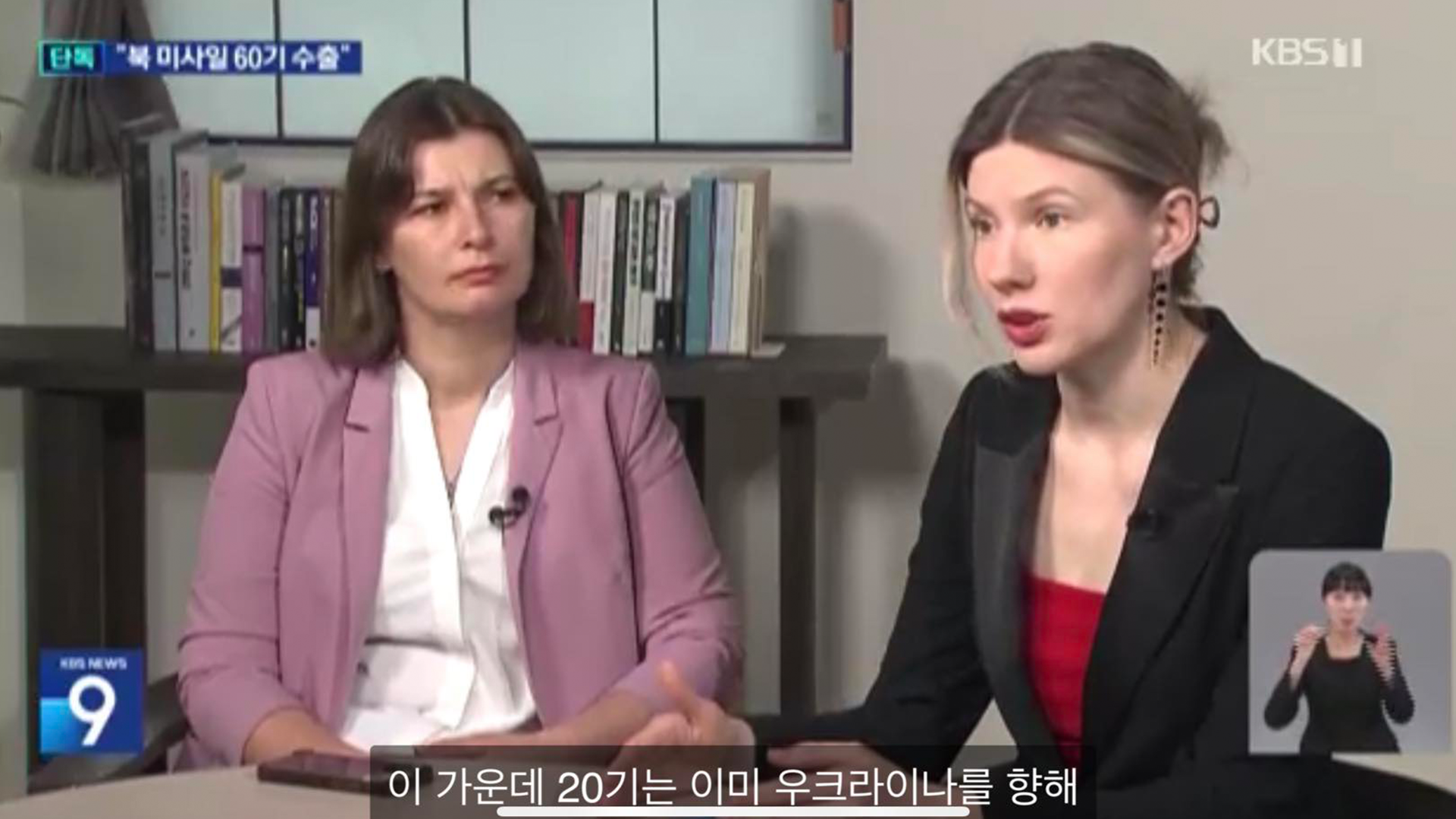
The executive director of NAKO, Olena Tregub, and the executive director of the Anti-Corruption Center, Darya Kaleniuk, spoke on the main Korean TV channel, “Korean Public Television.”
During the broadcast, they discussed the news about North Korea’s export of 60 KN-23 missiles to Russia, the possible consequences of the war in Ukraine, and the international community’s reaction. They also touched on the topic of North Korea’s arms supply to Russia and what North Korea gets in return.
Olena Tregub emphasized: “The Korean public should know what is happening in Ukraine and what consequences this war has for their own security. The support of Ukraine is important for the Republic of Korea.”
We will remind you that on May 20-26, the executive director of NAKO, Olena Tregub, and a delegation of Ukrainian civil society were on an advocacy visit to the Republic of Korea. During the week, she met with South Korean politicians, diplomats, and experts and commented on leading TV channels and newspapers about the current situation in Ukraine.
During the visit, the delegation talked about the two years of full-scale war that Russia is waging against Ukraine, the urgent needs of our country at the front, the critical infrastructure destroyed by Russia, and the protection of our skies. It was also about humanitarian issues, particularly the cancellation of visas for Ukrainians and educational programs for our students.
This trip is made possible by the generous support of the American people through the United States Agency for International Development (USAID) within the Ukraine Civil Society Sectoral Support Activity implemented by ISAR Ednannia in partnership with the Ukrainian Center of Independent Political Research (UCIPR) and Centre for Democracy and Rule of Law (CEDEM). The contents are not the responsibility of ISAR Ednannia and do not necessarily reflect the views of USAID or the United States Government.