

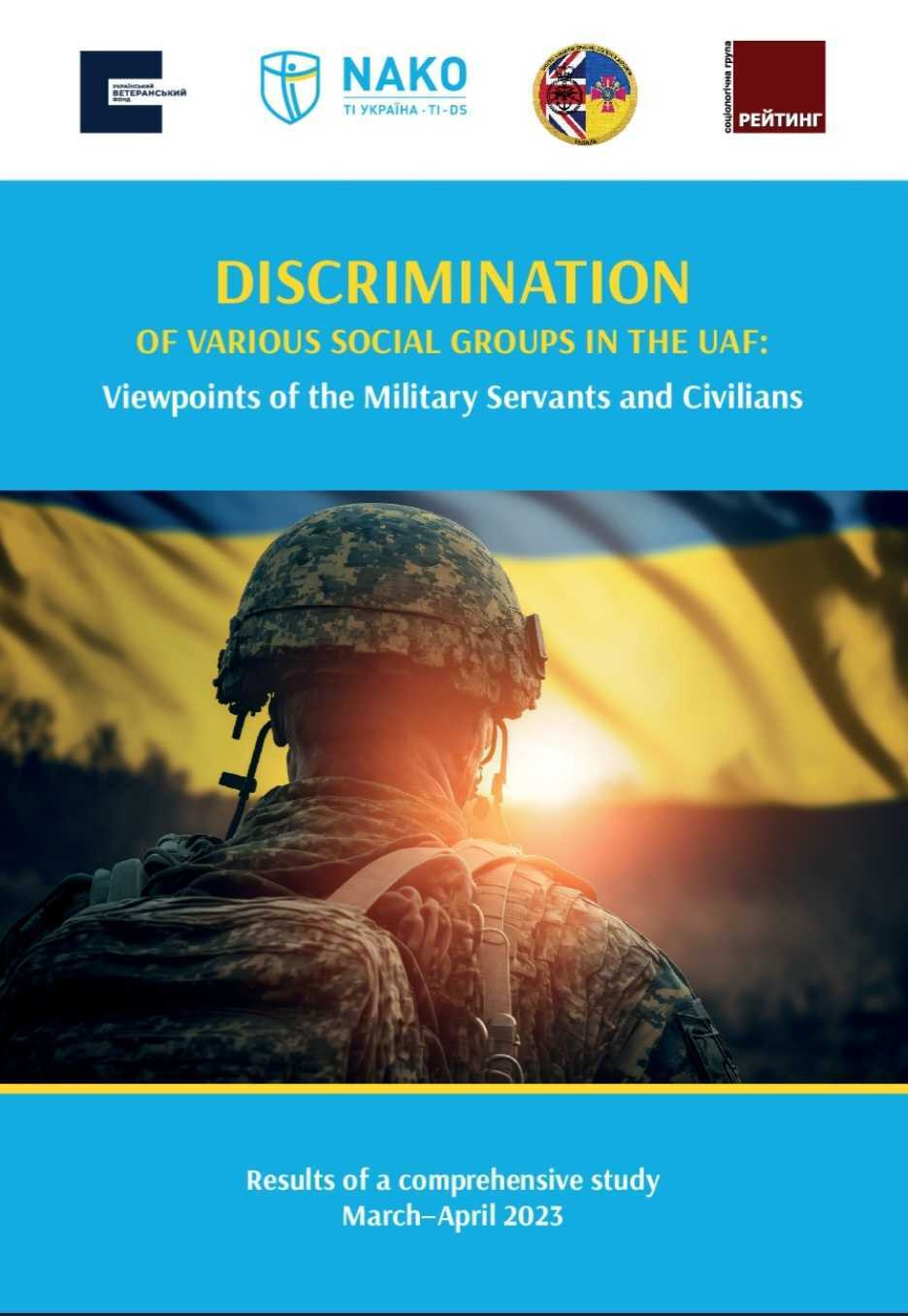
On June 5, at 11:00, the Ukrainian Veterans Foundation of the Ministry for Veterans Affairs together with the Independent Anti-Corruption Commission (NAKO) presented a sociological study: “Discrimination Against Different Social Groups in the Ukrainian Armed Forces (UAF): Military and Civilian Viewpoints”. The study was conducted by the Rating Sociological Group.
The aim of the study was to identify general trends of possible discrimination against male and female defenders based on their affiliation with different social groups, ranging from women and LGBT people to representatives of different ethnic groups.
“All male and female defenders, who risk their lives and health for the sake of Ukraine, equally deserve respect from the society and the government,” said Svitlana Musiiaka, NAKO’s Head of Research and Policy. Based on the study data, she spoke about the general trends of discrimination against military personnel coming from certain social groups that have been observed during their service.
Generally speaking, the situation with inequality and discrimination has been improving, especially since the beginning of Russia’s full-scale invasion of Ukraine, but this improvement is not equal for different social groups. The number of women serving in the UAF has been increasing, and they are becoming more and more visible. Women with previous combat experience are treated with particular respect. At the same time, there are still many stereotypes that women have to defy to be able to serve. According to the representatives of the focus groups, the so-called “commanders from the Soviet past” have many stereotypes, and they can also be outright sexists.
Moreover, the attitude of commanders and superiors to discrimination or non-discrimination plays a major role. According to an interview with one of the focus group participants, if the commander is adequate, then the attitude toward women in the unit is also adequate.
LGBT servicepersons who participated in the survey also mentioned the important role of the commander. Society’s attitude toward them, as well as the attitude of their fellow soldiers in general, is gradually improving. But there are still a lot of homophobes in the army, and mostly “adequate attitude” is found in the units that have reasonable commanders. At the same time, there are still units and branches of the military where members of the LGBT community are unwelcome. For example, “They won’t take me into Azov, air assault, and intelligence, so I have to hide my identity.”
The study has also analyzed national minorities in the UAF, convicted female and male veterans, and examined mental health and psychological support issues.
During the presentation of the survey results, the participants discussed the issue of discrimination and the attitude of society toward veterans and members of the military. The focus was on the perception of discrimination by the servicepersons and veterans themselves.
“We are striving to develop a veteran’s policy of non-discrimination against veterans and their families. We aim to ensure that providers of public or commercial services are not biased against them, etc. The Ukrainian Veterans Foundation regularly conducts studies on veteran-related issues (sociological surveys, focus groups, and analysis of international practice). As a result, we get an opportunity to talk about the issues through the voices of veterans and find solutions using analytical data,” says Ruslana Velychko-Tryfoniuk, First Deputy Executive Director of the Ukrainian Veterans Foundation.
The participants analyzed the most common stigmas suffered by servicewomen, veterans with disabilities, and other social groups. We identified ways of productive communication between the government, society, and veterans. We agreed that such interaction should be based on respect, dignity, and recognition.
Devotion to Ukraine and leadership in the defense of our country are things that do not depend on gender, nationality, or age. All veterans are different. Yet the victory will be common. We should be grateful to them for their choice and protection.
The event was also attended by:
- Svitlana Berezina – Director of the Strategic Planning Directorate of the Ministry for Veterans Affairs
- Oksana Hryhorieva – Gender Advisor to the Commander of the Land Forces of the Armed Forces of Ukraine
- Mariia Berlinska – veteran and volunteer
- Liubomyr Mysiv – Deputy Director of the Rating Sociological Group
- Yuliia Kirillova – veteran, UVF analyst
- male and female veterans
The event was moderated by journalist and host Nataliia Sokolenko.
Read the study:
The study was conducted and the event was held with the support of the UK Special Adviser on Defense.