

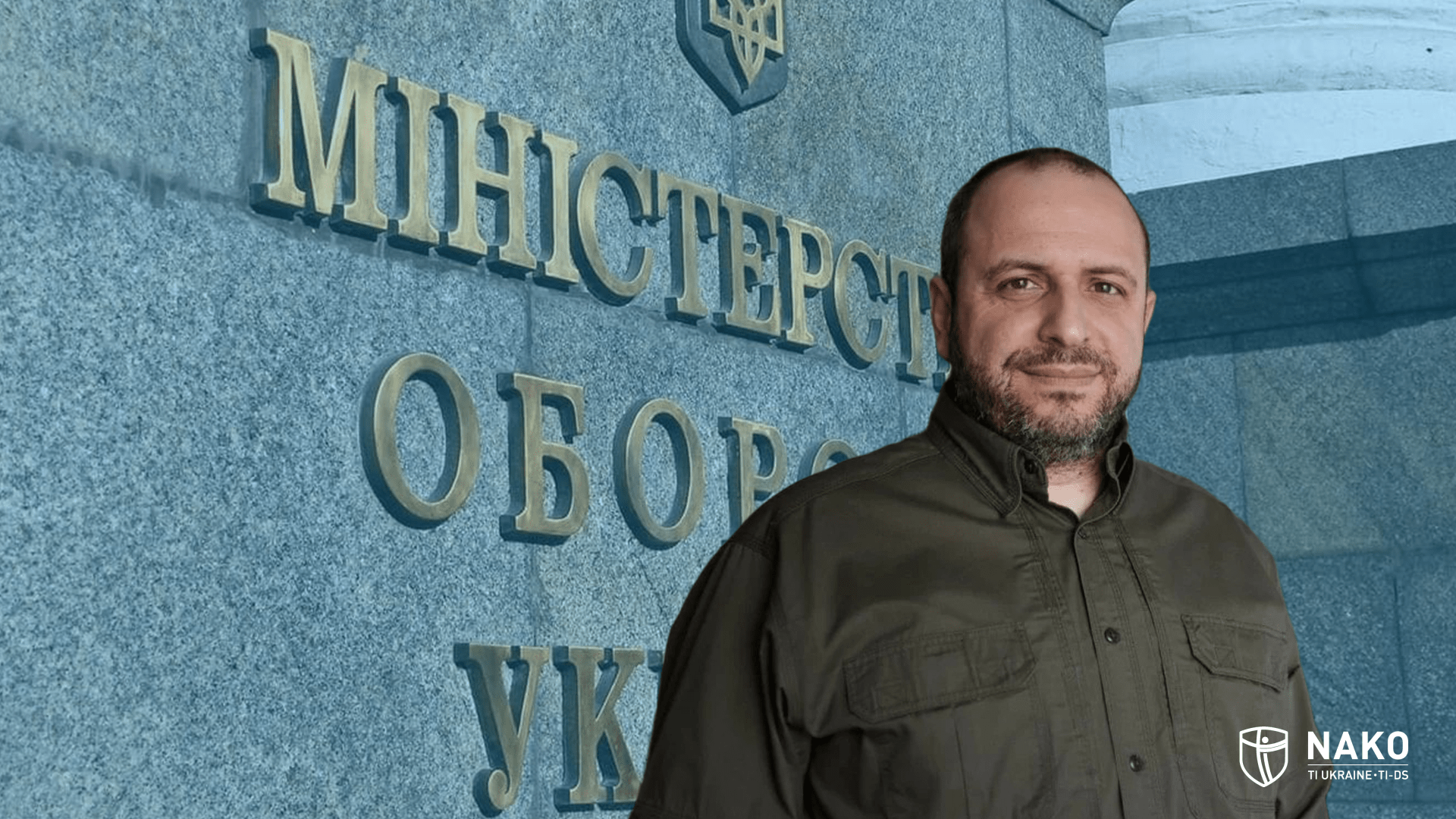
Minister Rustem Umerov assumed office following a heightened scrutiny of the Ministry of Defense, after his predecessor, Oleksii Reznikov, resigned amid corruption scandals that raised serious concerns about the ministry's transparency and accountability. Over the past year, Umerov has navigated several complex challenges, particularly in addressing systemic corruption and reforming Ukraine’s defense procurement processes. Below is a detailed analysis of his performance over the year, based on insights from civil society organizations (CSOs) monitoring the defense sector.
Absence of Major Corruption Scandals
One of the most notable achievements of Umerov's tenure is the absence of major corruption scandals directly involving him. Under his leadership, the Ministry of Defense has not experienced controversies comparable to the "Reznikov jackets" or "Reznikov eggs" scandals that tarnished his predecessor’s reputation. Umerov’s focus on combating corruption within the ministry has been visible through the arrests made by the Security Service of Ukraine (SBU), primarily targeting lower-level officials, such as department directors.
While these actions reflect progress, they also signal the ministry’s ongoing struggle with entrenched corruption. However, the lack of protection for corrupt officials within the ministry demonstrates that Umerov is committed to cleaning up the defense sector, and his efforts in this area have been acknowledged as a positive step forward.
Challenges in Implementing Key Reforms
Despite the crackdown on corruption, civil society organizations have voiced concerns about the pace and effectiveness of the reforms Umerov was expected to implement. There was hope that Umerov would lead systemic changes that would prevent corruption from occurring in the first place. While two defense procurement agencies were established—one responsible for lethal goods and the other for non-lethal items—these agencies are not yet functioning at full capacity. This is largely due to the lack of supervisory boards and the incomplete reform of the defense procurement system.
The Ministry of Defense is responsible for developing procurement policies to ensure that Ukraine’s armed forces receive high-quality goods. However, the current system remains inefficient. Although the ministry has shifted away from purchasing overpriced goods (such as eggs for 17 UAH per unit), issues persist, such as logistical delays and delivering spoiled food to the front. These problems highlight the need for deeper structural reforms to improve the procurement system and ensure that the armed forces receive necessary supplies on time and in good condition.
Internal Communication and Coordination Issues
Another significant challenge within the Ministry of Defense under Umerov has been a lack of internal communication and coordination among the ministry’s leadership. Umerov relies on his advisors and deputies for various tasks, but there are often gaps in coordination between them. This has led to inefficiencies in executing the ministry’s objectives, particularly in international cooperation, where clear communication and alignment are essential.
Weakness in International Engagement
A major area where Umerov’s leadership has faced criticism is in international cooperation. Unlike his predecessor Reznikov, Umerov has not yet established a unified center within the Ministry of Defense dedicated to international cooperation. Instead, several deputy ministers and Umerov himself have shared responsibility for these efforts, which has diluted the ministry’s ability to effectively engage with international partners.
International agreements, such as those made at high-level meetings involving the Office of the President or Minister Umerov, require detailed follow-up by technical staff who can clearly articulate Ukraine’s defense needs, quantities, and timelines. Unfortunately, this technical groundwork has not been consistently executed. For instance, although Ukraine successfully secured F-16 fighter jets, there are significant concerns regarding the modernization of these aircraft, such as upgrading radar systems, which would make them more effective in countering Russian air forces. The absence of clear follow-through on these technical details undermines Ukraine’s efforts to maximize the value of international defense support.
Civil Society’s Role in Highlighting Issues
One of the most concerning trends observed by CSOs is that non-governmental organizations (NGOs) and civil society groups often seem more informed and proactive than the Ministry of Defense itself when it comes to international aid. For example, organizations like "Razom for Ukraine" closely monitor U.S. military assistance and analyze how much funding remains available for Ukraine’s defense. They have often raised concerns ahead of the Ministry of Defense, such as the risk of losing nearly $5 billion in U.S. funds, demonstrating a proactive approach that appears to be lacking within the ministry.
While this particular issue is not solely the responsibility of the Ministry of Defense—U.S. authorities bear most of the responsibility—the contrast between the work of activists and the ministry’s response is striking. Civil society groups, particularly in the U.S., often have a clearer understanding of how to leverage international aid, whereas the Ministry of Defense seems slower to address critical issues.
The Role of the Anti-Corruption Council
The establishment of the Anti-Corruption Council within the Ministry of Defense is another significant development that took place after Reznikov’s departure. This council, composed of civil society representatives, was created as a response to the corruption scandals that plagued Reznikov’s tenure. The council has been effective in promoting transparency, offering greater access to information, and providing oversight of procurement processes.
The council’s presence has undoubtedly disrupted corrupt schemes, as increased scrutiny makes it harder for corrupt actors to operate within the ministry. Over the past year, the council has studied the ministry’s challenges, provided numerous recommendations on improving procurement quality, and ensured that members of supervisory boards are selected based on integrity and reputation. These efforts have contributed to greater transparency within the ministry, and it is crucial that the council continues its work for the next two years without delay from Umerov’s administration.
The Need for a Clear Reform Plan
While it is absolutely understandable that implementing reforms during a hot war is an extraordinary challenge, this is precisely what society expects from Minister Umerov. Despite the chaotic and hectic nature of his first year in office, Umerov now needs to present a clear step-by-step plan for the reforms he intends to undertake. This plan should include well-defined deadlines and a commitment to implementing significant changes in the defense sector over the next year.
Moreover, Umerov must communicate better about how he plans to improve internal coordination within the Ministry of Defense. The lack of internal communication has been a recurring issue, and without addressing it, the ministry will struggle to operate efficiently. Umerov should also explain how he plans to enhance communication with international partners to ensure that Ukraine effectively utilizes all the assistance it receives during the war.
Conclusion and Future Outlook
Minister Umerov’s first year in office has been marked by important steps forward, particularly in addressing corruption and avoiding the scandals that plagued his predecessor. However, significant challenges remain in reforming the defense procurement system and improving internal coordination within the ministry. While the lack of major scandals is a positive sign, the pace of reform has been slower than anticipated, and civil society organizations continue to play a vital role in holding the ministry accountable.
Moving forward, it is essential that Umerov strengthens international cooperation mechanisms within the Ministry of Defense and accelerates the implementation of key reforms, particularly in defense procurement. The Anti-Corruption Council has proven to be an effective oversight body, and its work should be further supported to ensure that Ukraine’s defense sector remains transparent and accountable during these critical times.
Ultimately, Umerov’s success will depend not only on his ability to maintain transparency but also on his willingness to present a clear reform plan and follow through with concrete actions. Communicating this plan to society and his international partners, and setting clear, actionable deadlines, will be critical for maintaining public confidence and ensuring that Ukraine’s defense capabilities are enhanced in the long run.