
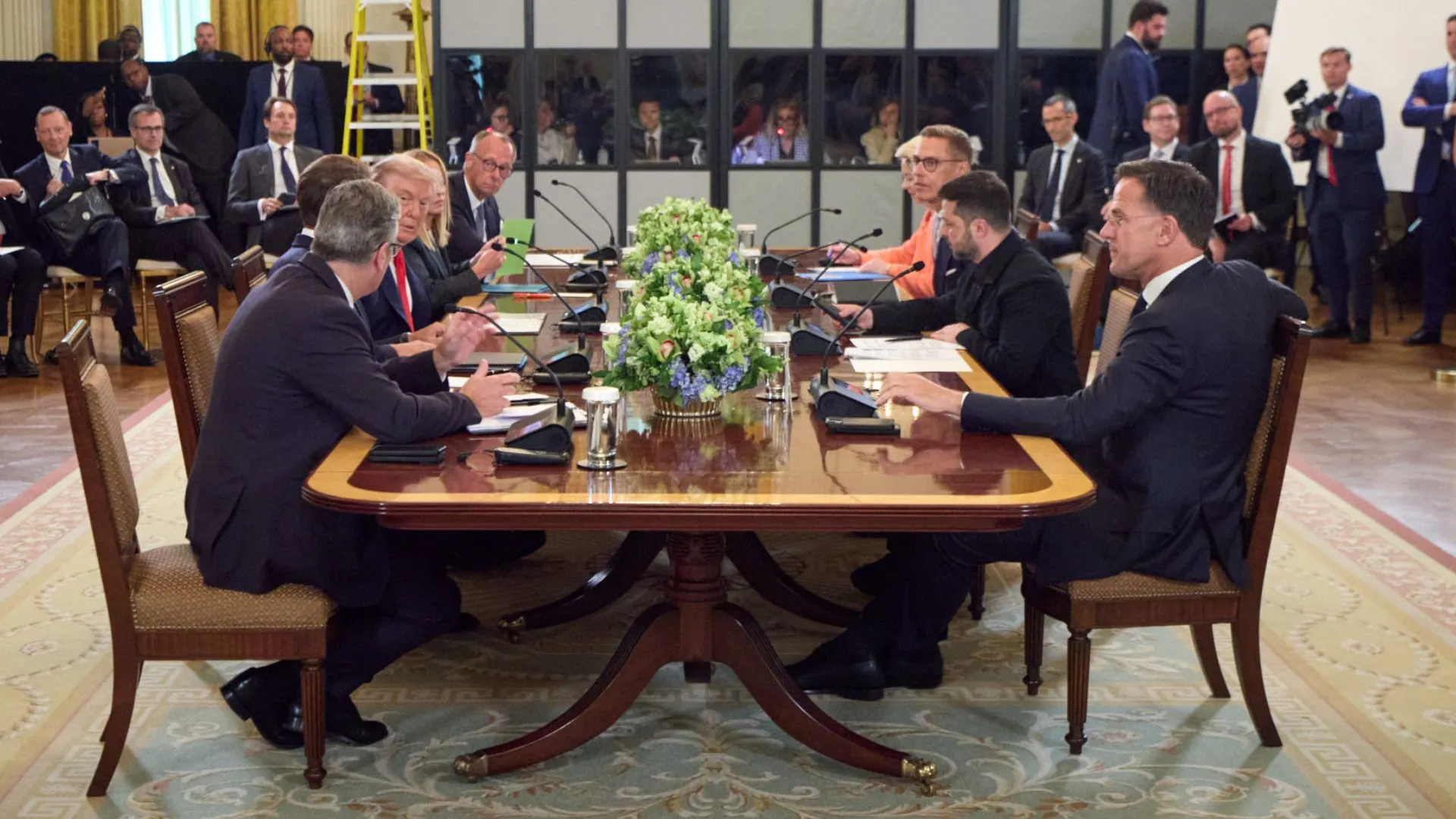
On August 18, 2025, Washington hosted negotiations between the leaders of Ukraine, the United States, and European countries. The discussions focused on strategies to end the war and provide security guarantees for Ukraine. Following the talks, U.S. President Donald Trump announced preparations for a personal meeting between Ukrainian President Volodymyr Zelenskyy and Russian President Vladimir Putin.
As a result, Ukraine and its allies started drafting a framework for security guarantees to strengthen Ukraine’s military capabilities—specifically to prevent Russia from demanding limits on the size of the Armed Forces of Ukraine, Bloomberg reports.
According to Zelenskyy, the guarantees should resemble NATO’s Article 5, which obliges all Alliance members to assist allies in case of an attack. He emphasized the need for a clear structure: a list of countries that would assist Ukraine on the ground, in the air and at sea. Additionally, allies must consider financing and supporting the size of Ukraine’s army, which “will serve as Ukraine’s shield.”
Security guarantees will be provided by European countries under U.S. coordination. Some are considering sending a peacekeeping contingent to Ukraine. For his part, Trump ruled out deploying American troops. The U.S. could provide intelligence and monitor Ukraine’s borders instead.
The military component is being developed by the commanders-in-chief of the Ukrainian Armed Forces and partner nations. According to Suspilne, military guarantees include arms supplies, financial support and training for Ukraine’s Defense Forces, intelligence sharing, and joint exercises. Political guarantees are being shaped by national security advisers. These focus on establishing a clear response algorithm in the event of future Russian aggression. The document, combining political and military components, is expected to be finalized by the end of August.
“What matters is not the form of the security guarantees but their substance. Real guarantees must prevent Russia from waging war against Ukraine. For instance, if partners deploy deterrence forces, then the guarantee must be an automatic engagement of these partners in the war if their troops are attacked. Or, if the guarantees envision a different mechanism, it must ensure that in the event of a new Russian assault, partners decide on military assistance to Ukraine—its scale and form,” said Olena Tregub, NAKO Executive Director.
