

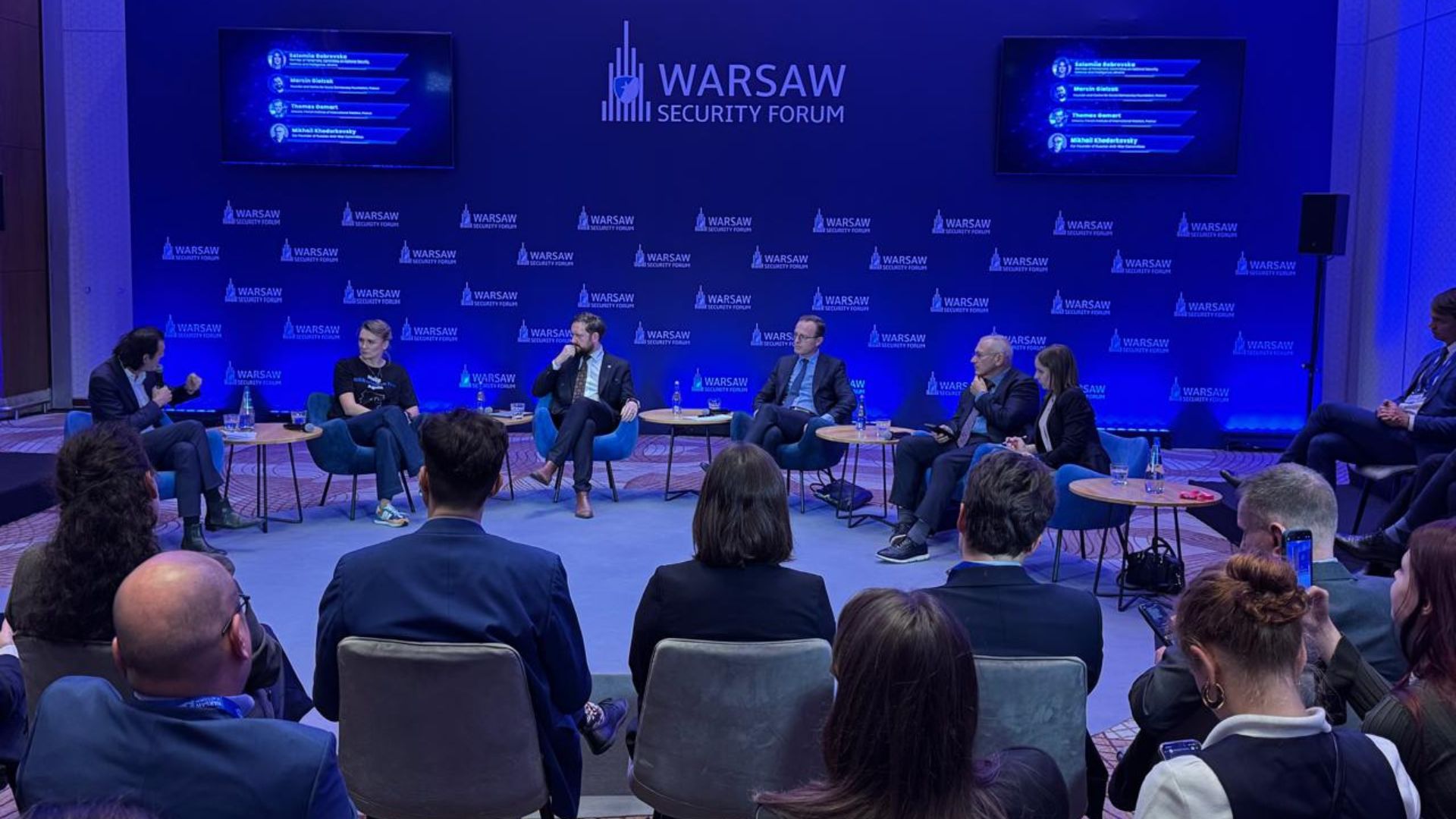
On 29–30 September 2025, Poland hosted the 12th Warsaw Security Forum, which brought together over 3,000 participants — including NAKO Executive Director Olena Tregub and Senior Researchers Viktoria Vyshnivska and Tetiana Nikolaienko.
The discussions focused on how European countries can maintain unity and respond to security challenges from Russia. Participants explored a range of tools to achieve this, including:
- strengthening sanctions against Russia;
- transferring frozen Russian assets to Ukraine;
- new formats of military cooperation between Ukraine and the EU — such as joint drone production;
- the SAFE initiative, which foresees €150 billion in EU defence procurement.

President of Ukraine Volodymyr Zelenskyy called for the creation of a joint shield against Russian air threats: “Ukraine is capable of countering all types of Russian drones and missiles, and if we act together across the region, we will have enough weapons and production capacity to do so.”
However, according to NAKO Executive Director Olena Tregub, Europe is still not ready to defend itself, though it has started to reflect on its own preparedness for war. At the forum, European officials asked how to prepare their societies and militaries for a potential armed conflict. Yet, as Tregub noted, the level of discussion remains basic — some delegates asked how Ukraine’s air alert system works.
“From the reactions of European military officials, I noticed they have begun listening much more carefully to Ukrainian delegates — both military representatives and civil society experts working in the defence sector. They asked, for example, how Ukrainians know when a drone or missile is approaching. We showed them how smartphone alerts work. I was surprised that defence officials from Europe didn’t know about this,” she said.
Tregub added that a turning point will come once Europe recognises that the war in Ukraine is Europe’s war as well: “We often assume that Europe knows our war — that people there understand what the Air Raid Alert app is or could describe a Shahed drone. In reality — they don’t. Even people working in foreign ministries sometimes ask whether planes still fly in Ukraine. For most, this war remains somewhere in the background”. Only when Europe rethinks its role in this war will we see tougher sanctions and serious investments in defence, she concluded.
NAKO Senior Researcher Tetiana Nikolaienko described statements by world leaders that “Russia cannot win the war” as “unjustified optimism”. Meanwhile, discussions about the development of European arms industries were met with critical questions from the audience — such as why Europe spends years developing expensive weapons while Ukrainians are already replacing them on the battlefield with cheaper alternatives, and what needs to change for Europe to start moving faster.

The Warsaw Security Forum, launched in 2014 by the Casimir Pulaski Foundation, is an annual international conference aimed at fostering dialogue and developing common approaches to pressing security challenges. It places a special focus on transatlantic cooperation and the security of Central and Eastern Europe, bringing together government officials, international institutions, civil society, experts, and think tanks from more than 90 countries each year.