

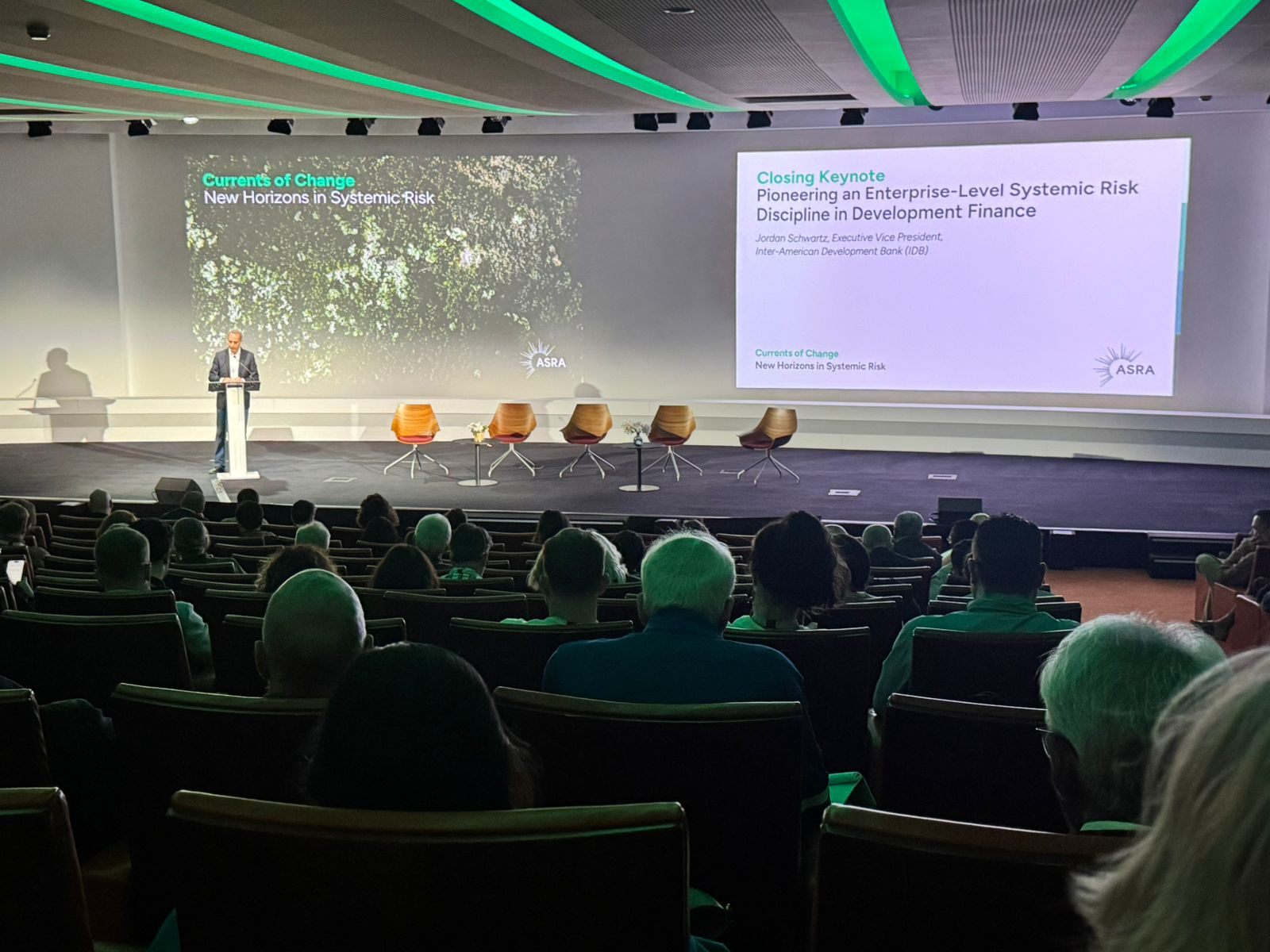
From June 7 to 9, Olena Tregub took part in the ASRA conference “Currents of Change: New Horizons in Systemic Risk,” held in France under the auspices of the UN Foundation and supported by the Accelerator for Systemic Risk Assessment (ASRA) — an initiative operating for over two years within the UN Foundation (asranetwork.org). ASRA helps experts around the world analyze interconnected global risks — for instance, how war can trigger a food crisis, a pandemic, an energy collapse, or social upheaval.


In her address, Olena emphasized that despite a large global community of analysts working across governments, financial institutions, businesses, and civil society, Europe was effectively blind to the threat of Russia’s full-scale invasion of Ukraine. This failure was rooted in a longstanding policy of appeasement and years of neglect in assessing systemic threats. Specifically, European countries voluntarily placed themselves in energy dependence on Russia, failing to recognize it as a national security risk — a strategic mistake that led to catastrophic consequences.
Olena urged experts not to remain siloed in narrow fields such as climate, public health, or finance, but instead to think holistically — to recognize the interconnections between war, corruption, pandemics, climate change, food, and energy security. She stressed that Ukraine today stands on the front line of the global confrontation between democracy and authoritarianism, and that developments in Ukraine directly affect the future of all of Europe. This is why the international community must closely follow what is happening in Ukraine, learn from the country’s experience of resistance, and support Ukrainian society.
Olena also presented a unique initiative — the establishment of the Public Anti-Corruption Council under the Ministry of Defence of Ukraine. This is a civil society response to the fact that Ukrainians perceive corruption as a real threat to national security, one that can cost lives on the battlefield. The Council is designed to ensure the effective use of defence resources and oversight of integrity during wartime. Ukraine’s experience is worth studying not only as a model of resistance but also as an example of deep societal transformation in the face of an existential threat.