


On 15 June 2026, the Independent Anti-Corruption Commission (NAKO) hosted Defence Talks discussion titled “Arms Exports During Wartime: How Ukraine Can Integrate into the Global Defence Market.” Representatives of the defence industry, military personnel, and experts discussed how Ukraine’s battlefield experience is reshaping the global arms market, what obstacles hinder the scaling of Ukrainian technologies, and what the future of defence partnerships with international allies should look like.
The event brought together representatives of the embassies of the European Union, Denmark, the Netherlands, Austria, Latvia, Sweden, France, the Czech Republic, Greece, and Japan, as well as military attachés, defence industry professionals, and journalists.
Over the past several years, Ukraine has become not only one of the world’s largest consumers of defence products but also a source of technological solutions that are already attracting significant interest from international partners. Participants agreed that Ukraine’s key advantage today is not any single product but its ability to adapt technologies to changing battlefield conditions at extraordinary speed.
The discussion was moderated by Tetiana Nikolaienko, NAKO Senior Researcher and Deputy Chair of the Public Anti-Corruption Council of the Ministry of Defence of Ukraine.
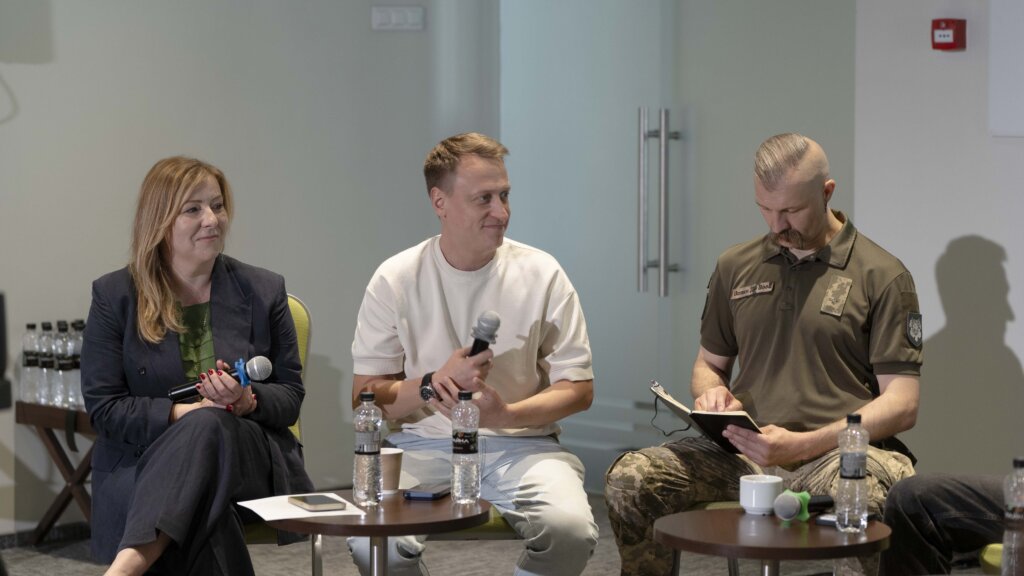
Opening the discussion, participants highlighted that the war is changing not only technologies but also the very logic of defence production: the cycle of development, testing, and deployment has been reduced from years to months, and sometimes even to a matter of weeks.
Oleksandr Yabchanka, Head of the Robotic Systems Service of the Da Vinci Wolves Battalion, presented the evolution of the modern battlefield and explained how the nature of warfare itself has changed over four years of war.
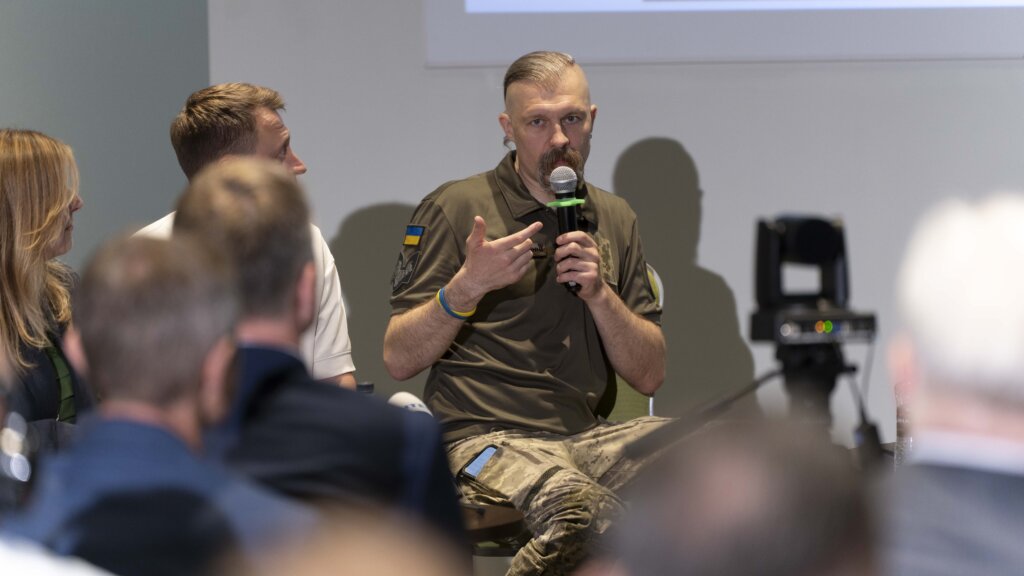
“Changes on the front line happen so quickly that the only way to keep up is to stay as close to it as possible. Cooperation between the military and manufacturers is what makes it possible to create solutions that work not in theory, but in real combat.”
He also stressed that the next stage in the transformation of warfare will be the struggle for control of the so-called “low sky” — the airspace where autonomous systems and interception capabilities will play an increasingly important role.
Defence technology expert Oleksandr Kopyl spoke about the journey of a Ukrainian defence company from a volunteer initiative to a manufacturer supplying products to international partners.
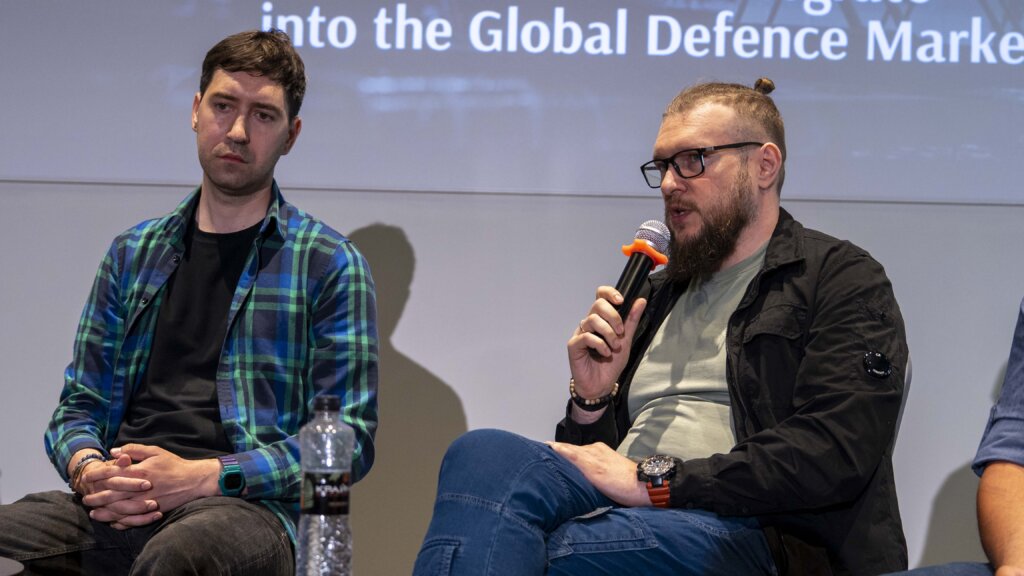
“Our main advantage is speed. What takes a year in peacetime conditions, we accomplish in a month in Ukraine. Constant battlefield feedback and the ability to adapt a product literally while it is being used are advantages that cannot be replicated elsewhere today.”
He also drew attention to the importance of predictable export procedures, citing his company’s experience with international contracts.
“The world is already ready to bet on Ukrainian technologies. But if we fail to provide clear and predictable export rules, this will create risks not only for businesses but also for our international partners.”
Denys Sviatokum, Board Member and Chair of the International Cooperation Committee of the Federation of Employers of Ukraine Defence, emphasized that exports are not an alternative to supplying the front line but rather a tool for developing Ukraine’s defence industry.
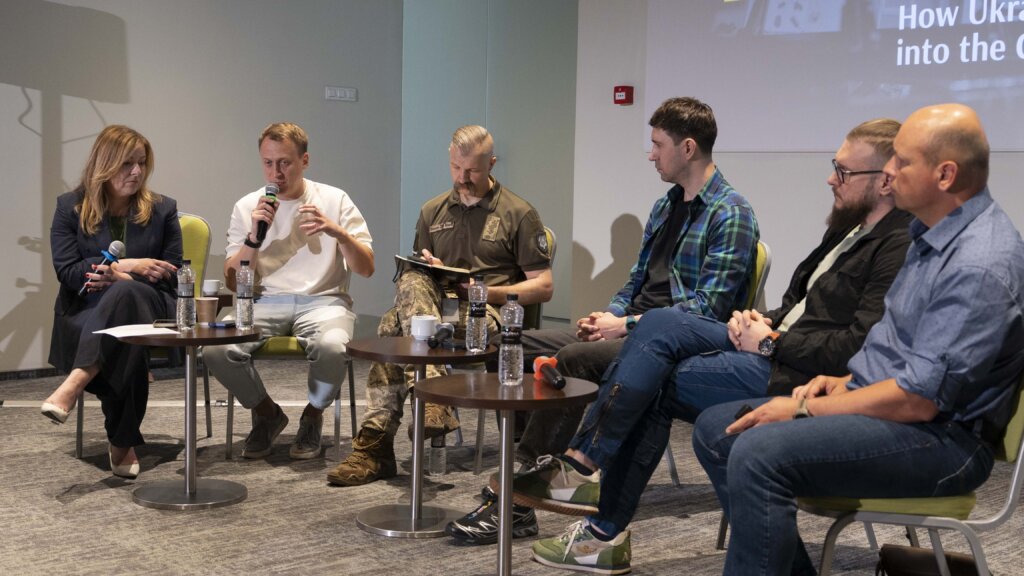
“Today, the key task is to find a balance between the needs of the front line and the development of the industry. We need to build a model in which production scales together with partners while Ukraine remains the centre of rapid research and development.”
He also stressed that Ukraine’s battlefield experience is an asset that cannot simply be transferred or replicated outside the country.
Anton Melnyk, Co-Founder of the defence fund MITS Capital and Co-Founder of Techosystem, highlighted that Ukraine’s defence sector is gradually reducing its dependence on imported components.
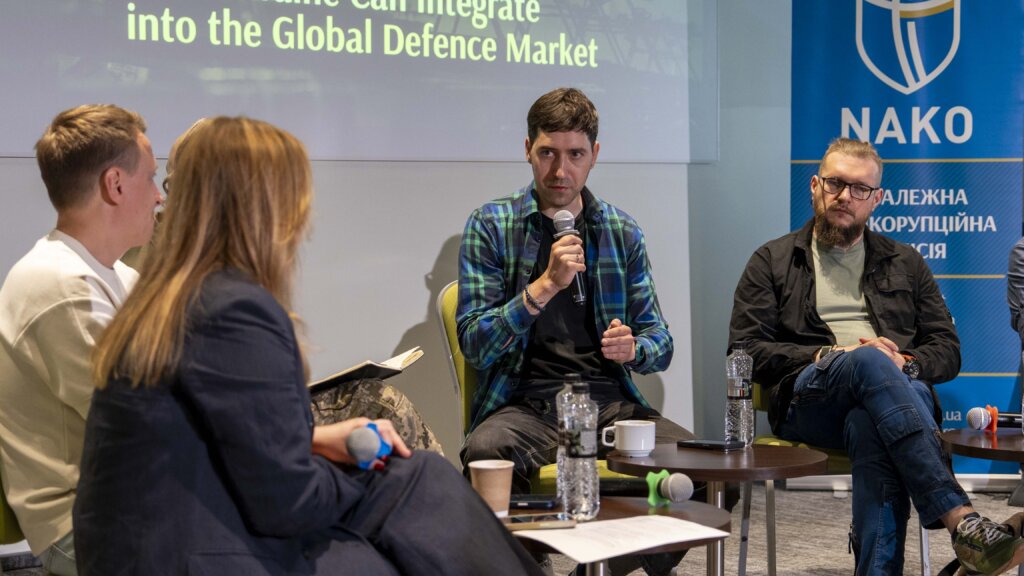
“We already have manufacturers producing Ukrainian engines, Ukrainian cameras, and Ukrainian guidance systems. The future is not just about assembling a product but about localizing the entire production chain.”
According to Melnyk, no technology creates an advantage on its own.
“Without Ukrainian soldiers, without Ukrainian manufacturers, and without constant use in real-world conditions, even the best product will remain just a good idea.”
Yaroslav Honchar, Co-Founder and Head of the NGO Aerorozvidka, pointed to another challenge: the need to learn how to assess not individual products but their actual effectiveness on the battlefield.
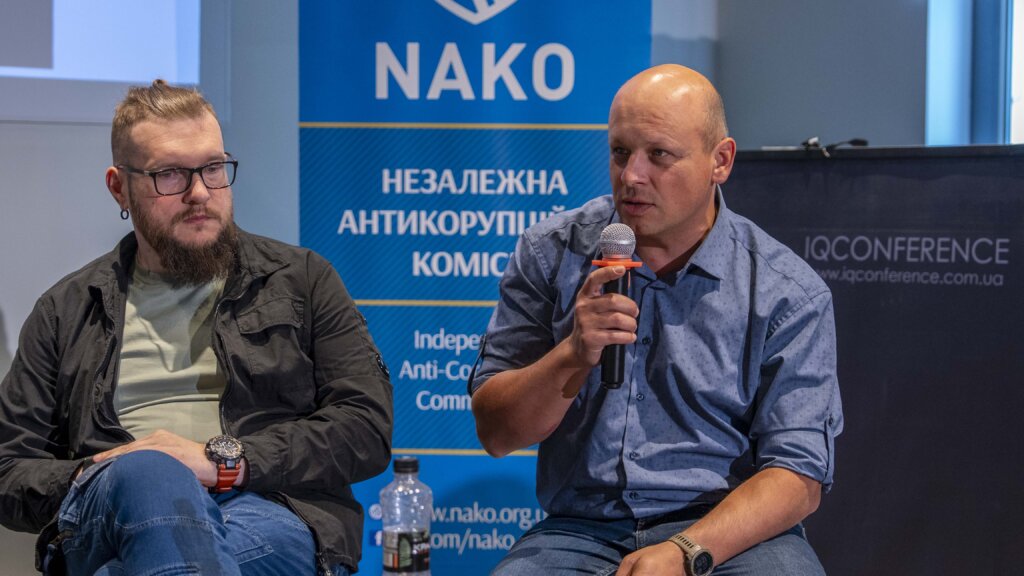
“Ukraine already possesses an unprecedented volume of data on the use of unmanned systems. But the goal should not be to find the ‘perfect drone’; it should be to build a system that enables decision-making based on performance and real operational experience.”
He also emphasized that intellectual property rights and the joint development of military solutions will become one of the key challenges for the future of Ukrainian defence exports.
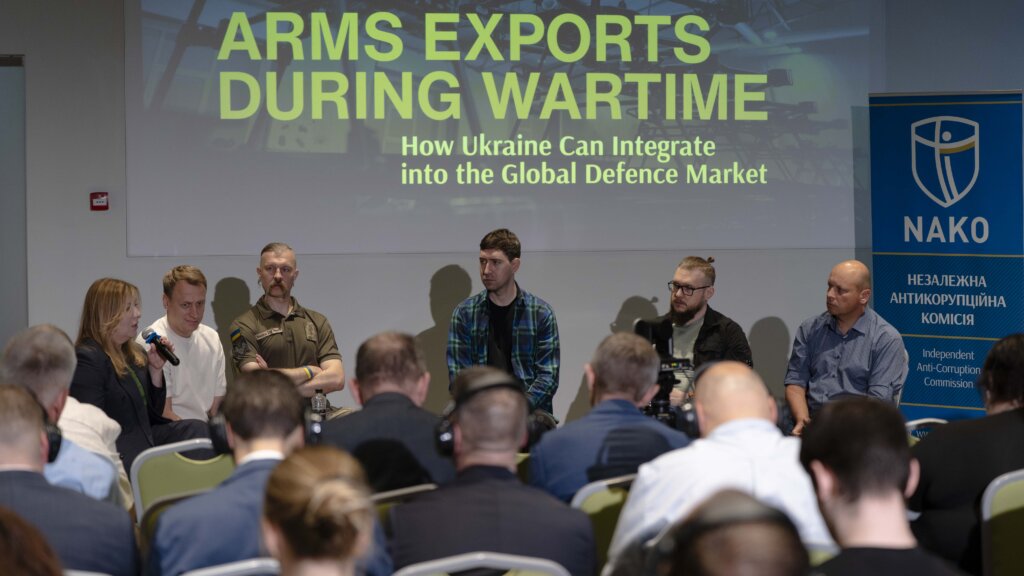
Summing up the discussion, participants agreed that Ukraine has already become not only a testing ground for defence innovation but also one of the centres shaping new approaches to the production and use of weapons. The next step is to transform this experience into long-term partnerships, scalable production, and the systematic integration of Ukrainian technologies into the global defence market.
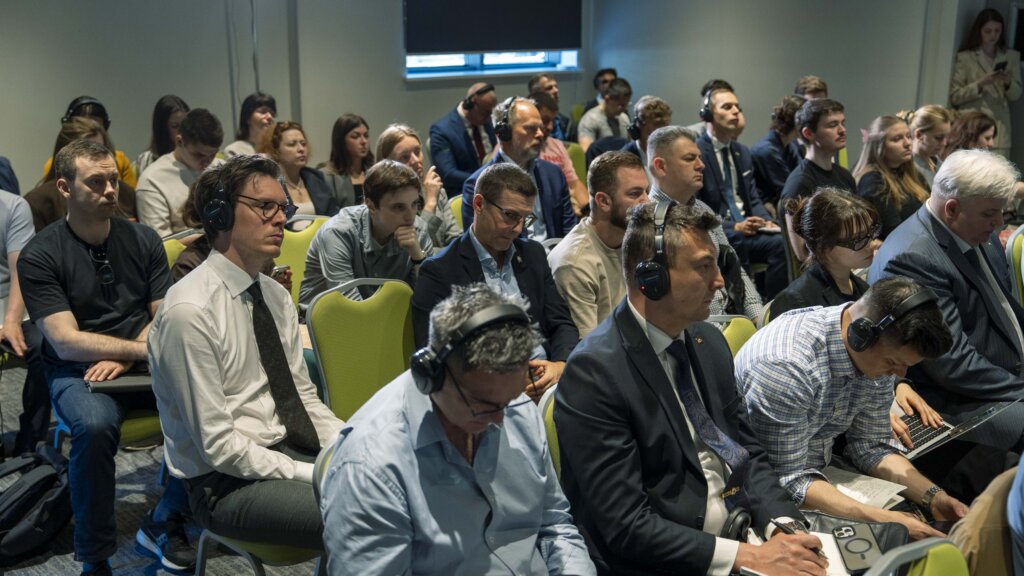
Defence Talks is a series of discussions organised by NAKO that brings together representatives of government, the defence industry, civil society, the diplomatic community, and the media to discuss key trends and challenges in Ukraine’s security and defence sector.
We thank our partners at the New Democracy Fund for supporting the event.