

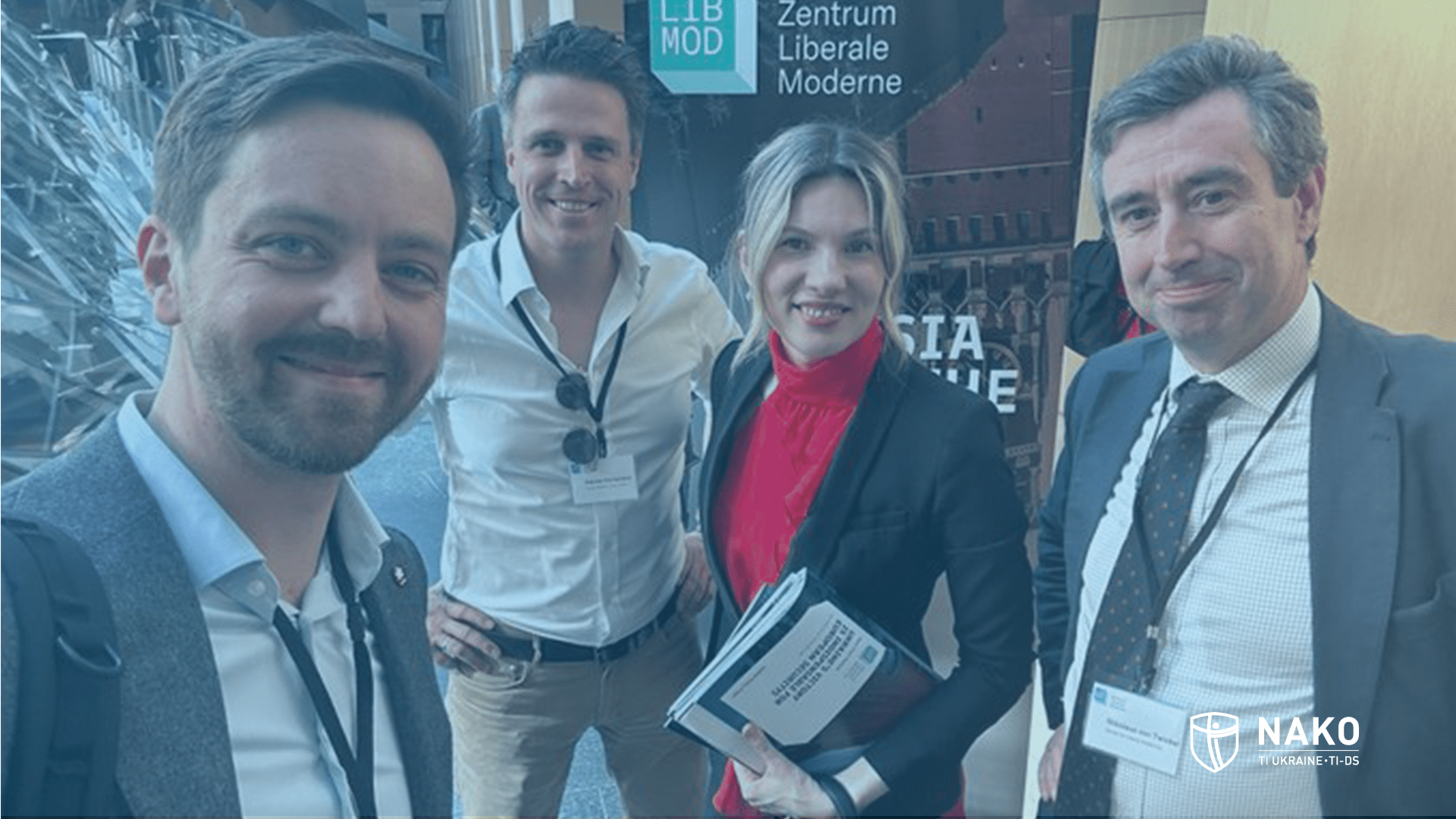
The Center for Liberal Modernity (LibMod) organized the annual "Russia and the West" conference in Berlin on May 15. This year's theme is “What's at stake? The war in Ukraine and the future policy of the West towards Russia."
"The best policy for Russia is a victory for Ukraine," emphasized German politician and co-founder of LibMod Ralf Fuchs. Another co-founder of the Center, the German politician Marilouise Beck, for her part, called on Europe to help Ukraine not "as much as needed" but at any cost. The conference participants very realistically assessed both the situation on the battlefield and the inadequacy of the West's efforts to support Ukraine.
In his speech, Lithuanian politician Andryus Kubilius asked a rhetorical question: Will Europe have enough determination to defeat Russia? Even though today, Europe's GDP is 25 times greater than Russia's, Russia invests much more resources in the war against Ukraine. This gives her a significant advantage on the battlefield—not only in the number of people but also in ammunition and weapons.
NAKO Executive Director Olena Tregub spoke at a discussion panel devoted to the issue of strengthening sanctions against Russia. She talked about NAKO's research in the field of sanctions policy of the European Union and, in particular, of Germany. The participants also discussed the topic of energy resources and the issue of liquefied gas, which the 14th package of EU sanctions can solve. As you know, Europe not only buys Russian liquefied gas for its needs but also became Russia's platform for further gas sales to Asian countries. According to experts, EU sanctions on liquefied gas can deprive Putin's regime of eight billion euros in profits annually.
German parliamentarians also debated at the conference. Germany's population supports Ukraine as a sign of solidarity and fair defense against the aggressor. However, not all citizens understand why Germany should help Ukraine and how this war affects their security prospects.
Being more aware of this issue, German politicians complain about the country's lack of political leadership and the overly cautious position of Chancellor Olaf Scholz, who seeks to avoid further escalation. Even though a coalition of European countries ready to more decisively support Ukraine may soon be formed, it is unlikely that Germany will lead it.
At the same time, Ralf Fuchs believes that Germany, with all its financial and production resources, will follow the leaders of such a coalition. He places his hopes on other European countries, particularly France, Britain, the Baltic countries, and Scandinavia, which would demonstrate NATO's leadership by strongly supporting Ukraine on the way to its victory.
This trip is made possible by the generous support of the American people through the United States Agency for International Development (USAID) within the Ukraine Civil Society Sectoral Support Activity implemented by ISAR Ednannia in partnership with the Ukrainian Center of Independent Political Research (UCIPR) and Centre for Democracy and Rule of Law (CEDEM). The contents are not the responsibility of ISAR Ednannia and do not necessarily reflect the views of USAID or the United States Government.
More photos from the event are available on the NAKO website.