
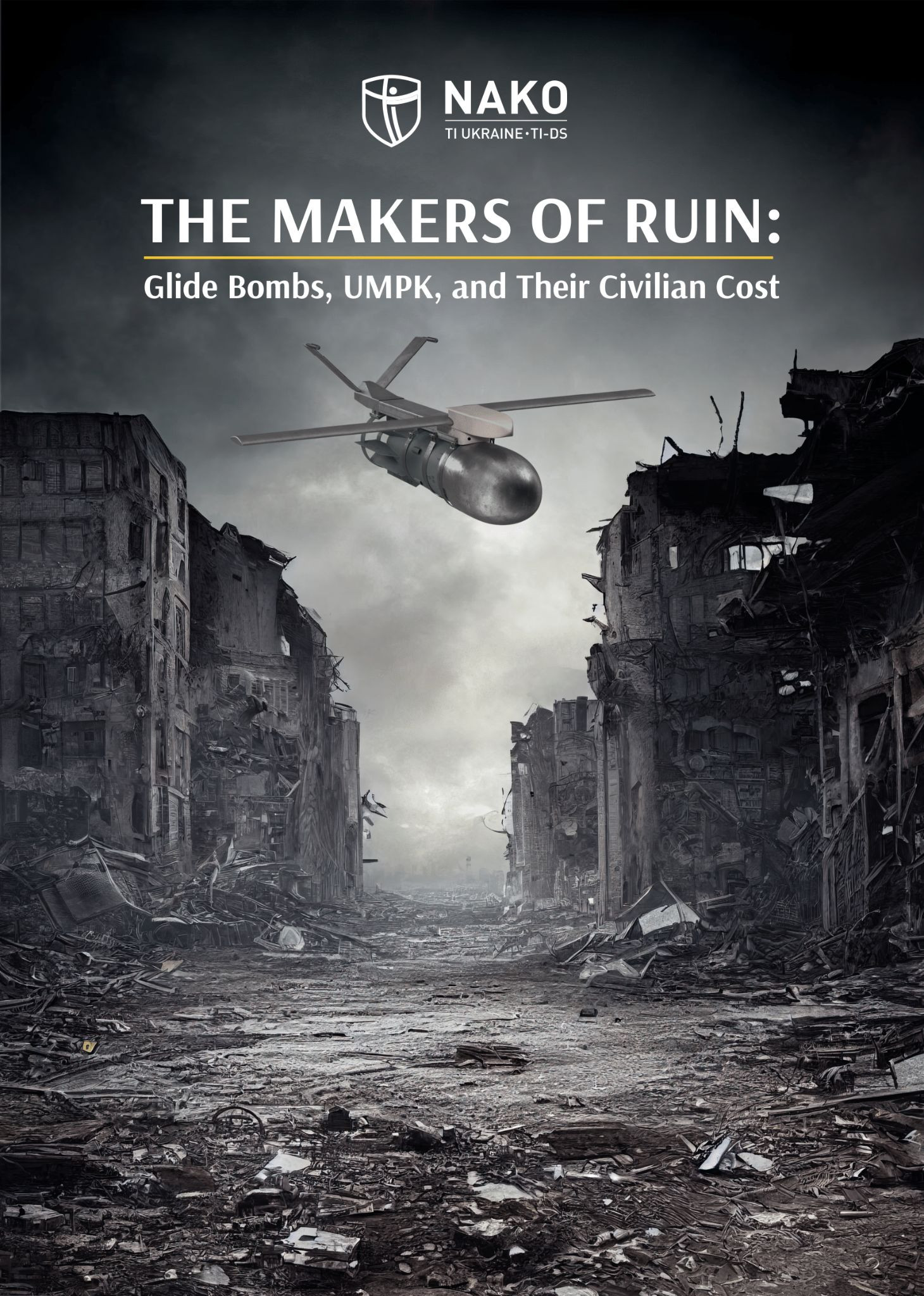
Since the start of the full-scale war, Russian aviation has used more than 51,000 guided aerial bombs against Ukraine, some 40,000 of them in 2024, according to the Air Force of the Ukrainian Armed Forces. High destructive power, but low quality—this is what the military says about guided aerial bombs. In Ukraine, these bombs have been used since 2023.
Thanks to these munitions, the Russians were able to take Avdiivka and are also attacking Ukrainian forces along the entire front line, especially in the Donetsk and Kharkiv regions. These bombs are also reaching the Zaporizhzhya and Dnipro regions. They are difficult to shoot down because they are launched beyond the range of Ukrainian air defence systems, and Ukraine has limited capabilities to counter them. Guided aerial bombs are mostly modernised Soviet munitions weighing between 500 and 3,000 kg and using a universal planning and correction module (UMPK). This module consists of bomb wings, which extend the range of the bomb, and a GPS navigation system, which is responsible for its accuracy.
In the new study, NAKO examined the remains of the UMPK. The researchers found that 71% of the UMPK’s microelectronics came from Western-based manufacturers. Of the 22 manufacturers identified, 10 are in the US, six in China, four in Switzerland and two each in Ireland and Japan. NAKO analysed a customs dataset containing over 600,000 records of shipments of electronic components that could be used in the production of UMPKs in Russia. In the research, analysts identify the approximate value of shipments of these components, as well as the companies (both private and state-owned) involved in these import transactions.
NAKO presented the report at a Defence Talks meeting dedicated to discussing ways to counter Russian glivde bombs, both through sanctions and directly on the battlefield.
