

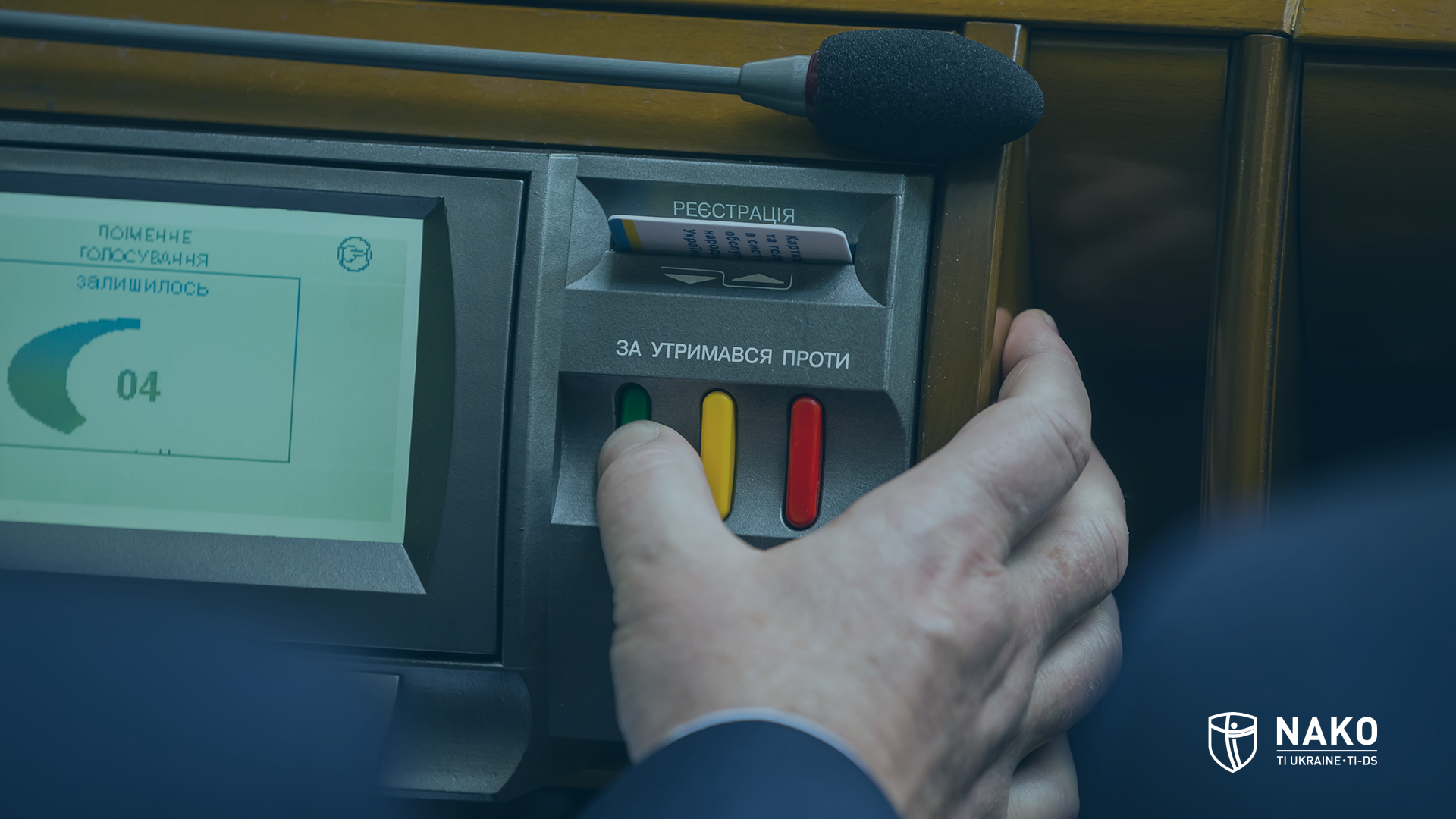
At the year’s end, people’s deputies gathered in the parliament to consider legislative initiatives only twice. Some of them were related to the security and defence sector. The Independent Anti-Corruption Commission offers a brief overview of the initiatives proposed and supported by the Verkhovna Rada of Ukraine in December.
On December 1, people’s deputies voted to expand military personnel’s social security guarantees. Thus, military personnel will be allowed to take leave for family or other valid reasons multiple times, each for no more than ten days. Moreover, the initiative of the Cabinet of Ministers to improve specific provisions related to military service was adopted as a basis at the same time.
However, this month, the most discussed draft law in the security and defence sector was undoubtedly the scandalous 8271. It amends some statutory regulations of Ukraine related to certain aspects of military service in a martial law or a combat environment.
Immediately following its adoption, the military, civil society, and mass media appealed to the president to veto the adopted law. NAKO has also analysed this legislative initiative. Our conclusion: given the mobilisation of hundreds of thousands of citizens into the ranks of the Armed Forces of Ukraine, this can result in significant negative consequences for persons who are not ranking military personnel, as well as narrow their right to a fair trial and proper remedies. More information about the NAKO analysis is available at the link.
A considerable public reaction also reached Valerii Zaluzhny, the Commander-in-Chief of the Armed Forces of Ukraine, and he supported this law. “I support the related amendments to the legislation adopted by the Verkhovna Rada of Ukraine and ask the President to sign the bill into law. My opinion is a clear reflection of the thoughts of commanders of groups and military units, who demanded a systematic solution to this set of issues,” said Zaluzhny. However, as of the end of December, Volodymyr Zelenskyi has not yet signed the adopted bill into law. But the president has not vetoed it either.
At the same time, the Verkhovna Rada introduced amendments to the law on military chaplaincy. It stipulates the option to train military chaplains in military educational institutions.
Currently, a new draft law is also submitted to the parliament, which proposes to provide the Ministry of Defense with authority to manage the seized property, primarily, corporate rights, during martial law. The draft law’s authors explain the forced seizure of property by the necessity to ensure quick management of consequences following emergencies in critical infrastructure.
However, we at NAKO believe this initiative requires a separate expert analysis and discussion. First of all, given the Ministry of Defense’s competencies in corporate rights management, this can entail significant corruption risks and the inability to effectively manage the seized property until the end of martial law.
Other legislative initiatives to be considered next year include the issue of granting relief from military service for scientific and academic employees. Thus, the draft law’s authors propose adding an academic rank or degree to the list of valid reasons to be granted relief from military service.
In December, they also registered a draft law aimed at improving principles of volunteer military units of territorial communities operations to timely respond and take the necessary measures to defend the territory and the population in the specified area. It envisages granting volunteer military units the status of a legal entity and allowing them to use and store arms.