

On January 21, Ukrainian media “Dzerkalo Tyzhnia” published information about the provision of food for the servicepeople for 2023. It contained several documents which caused outrage in Ukraine, as the prices are allegedly higher, while the supplier companies are close to several Ukraine’s Ministry of Defence officials.
The Ministry and minister Reznikov came out with a few public comments on the issue. Afterwards, the Parliamentary Committee reacted as well. Later the National Anti-Corruption Bureau also informed about the existing investigation on the said matter.
NAKO suggest looking through the recent days from a few different angles: Parliament, government, law enforcement, and, of course, civil society, which made this story possible.
How did the government react?
The Ministry of Defence’s public reaction and communication was the weakest part of this story. Firstly because it did not respond to the journalist’s public request for the information before his material was published, and although it is unknown how much time passed between the public inquiry and the article’s publication, the Ministry of Defence eventually got an opportunity to react. However, only after the scandal already broke out.
The official statement claimed the article to be a manipulative one. Even more, the MoD affirmed to contact the Security Service of Ukraine for spreading the false accusations, which was instantly considered an attempt to intimidate the journalist. Reasonably enough, it enraged people even more.
Afterwards, Oleksiy Reznikov came out with a detailed refutation. His statement, among other things, contained explanations on how the procurement procedure works, what precisely the MoD is contracting, how the price has changed and where the documents contain “technical mistakes”. He also paid attention to the speculation in the original article, emphasising the attempt to compare the incomparable. Traditionally, some
Ukrainians found this explanation sufficient, while others did not.
Ukrainians found this explanation sufficient, while others did not.
“UAH 17 per egg”: was there a manipulation?
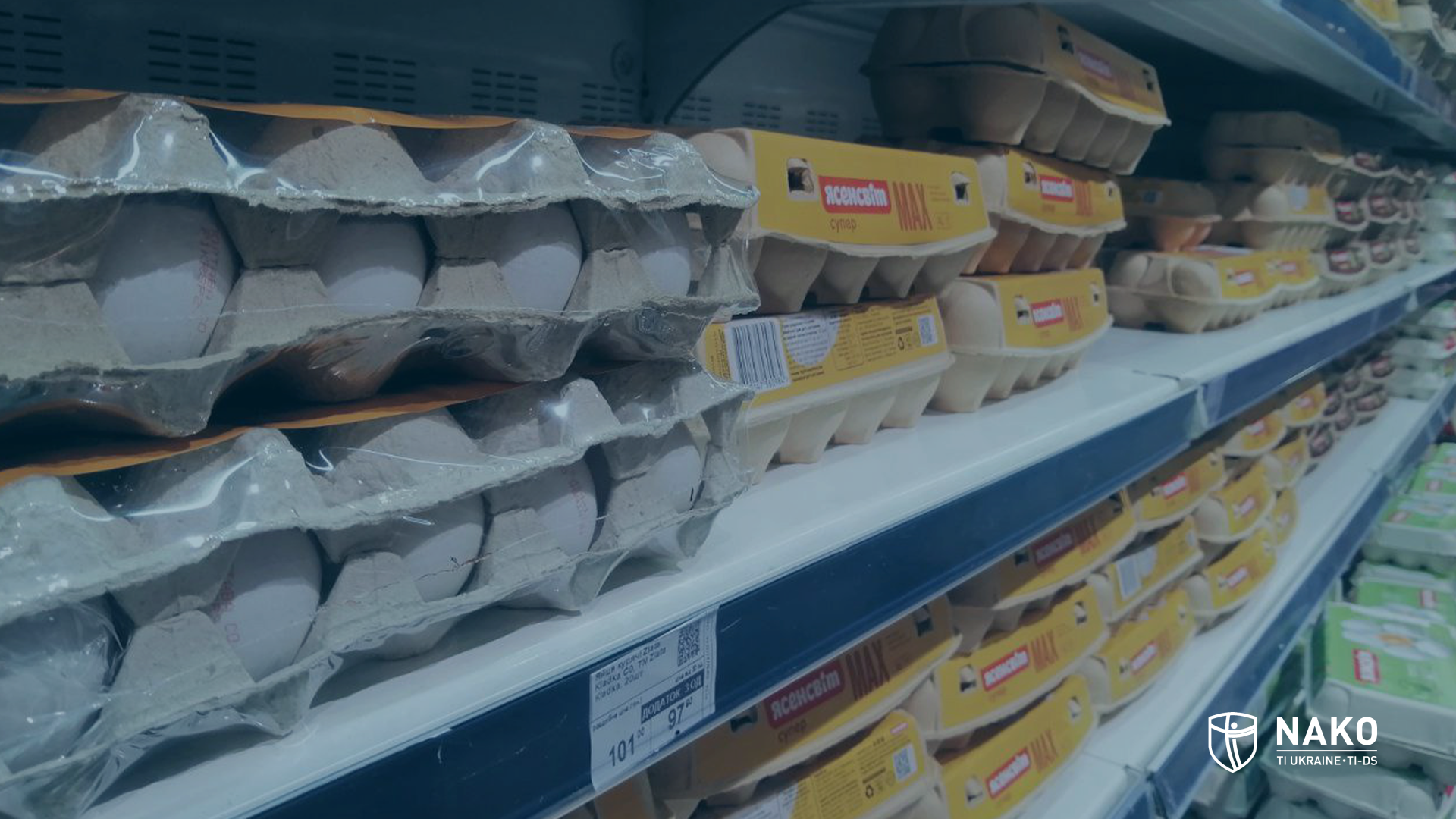
The eggs became this scandal’s “brand” among all the information in the journalistic investigation. The article says: “The MoD has contracted UAH 17 for an egg, while the retail price in Kyiv’s supermarkets is about 7 per piece.” Is it true?
The author shows documents with a details food and price catalogue. It certainly shows a price of UAH 17. However, not for a piece, as the article claims, but for a kilogram.


It would be worth mentioning that as of January 24th, the original article still contains incorrect information. It would be even more worth mentioning UAH 17 per kilo is the wrong price. In reality, as the MoD claims, the price should be UAH 170, which equals two dozen eggs. Respectively the journalist’s investigation and the original documents both contain mistakes. Conscious or unconscious.
The Arbiters: Parliament and Law Enforcement
Apart from the eggs, this story has several alarming signals: the prices, supplier companies, and procurement procedures in general. It is now the task of law enforcement and the parliament to figure out the issue.
The Parliamentary Committee for national security, defence and intelligence reacted quite fast. After all, one of their functions is to oversee the procurements. Thus on Monday, the MPs held a meeting where they heard the minister and looked through the Ministry’s documents on this case.
As of the meeting’s results, the Committee decided to contact law enforcement, particularly the NABU, as they had already been investigating the case. The MPs also decided to inspect the supplier companies and amend the defence procurement legislation. The key decision of the Committee was to open a certain part of the defence procurement. A specific draft law has already been registered in the parliament.
All of the defence procurement were classified as Martial Law enacted. Back then, it caused civil society outrage because total secrecy of even “the most innocent” procurement can cause broad public suspicion in the best-case scenario and bring enormous corruption risks in the worst one. “UAH 17 per egg” – is the direct result of such secrecy. Thus, opening several procurements to mitigate corruption risks and increase public trust was undoubtedly a proper decision.
Yet alongside this, there are still many issues in question: competitiveness of this exact and the rest of procurements; and the connections between the MoD officials and the supplier companies. Hopefully, the investigations by the NABU and the rest of law enforcement will find out all the “technical mistakes” and potential and factual embezzlements and, eventually, put an end to this story.
The real issues
Traditionally, defence procurement was and, unfortunately, still is a great temptation for corruptors. In times of war, total secrecy and trillion budgeting for the defence and security sector, such an issue becomes a substantially more significant threat for Ukraine.
And therefore, it is critically important for the state to react openly, harshly and proactively in both prevention and enabling the embezzlement attempts. Increasing transparency is a considerable part of a job, yet still a part only. Sadly, we cannot brag about our well-built procurement system, effective and timely control and, ultimately, the inevitable punishment.
Yet there is a silver lining. Recent days showed not only the apparent public significance but something else as well. Mainly it demonstrates how proactive the state can be in its reaction to the potential misuse. First and foremost, from the Parliament’s side, as it is one of the core elements of the democratic civil oversight over the defence and security sector.
And NAKO, in its turn, while being an organisation of civic oversight, is always ready to professionally assist the state in strengthening Ukraine’s defence and security sector and mitigating corruption risks.