

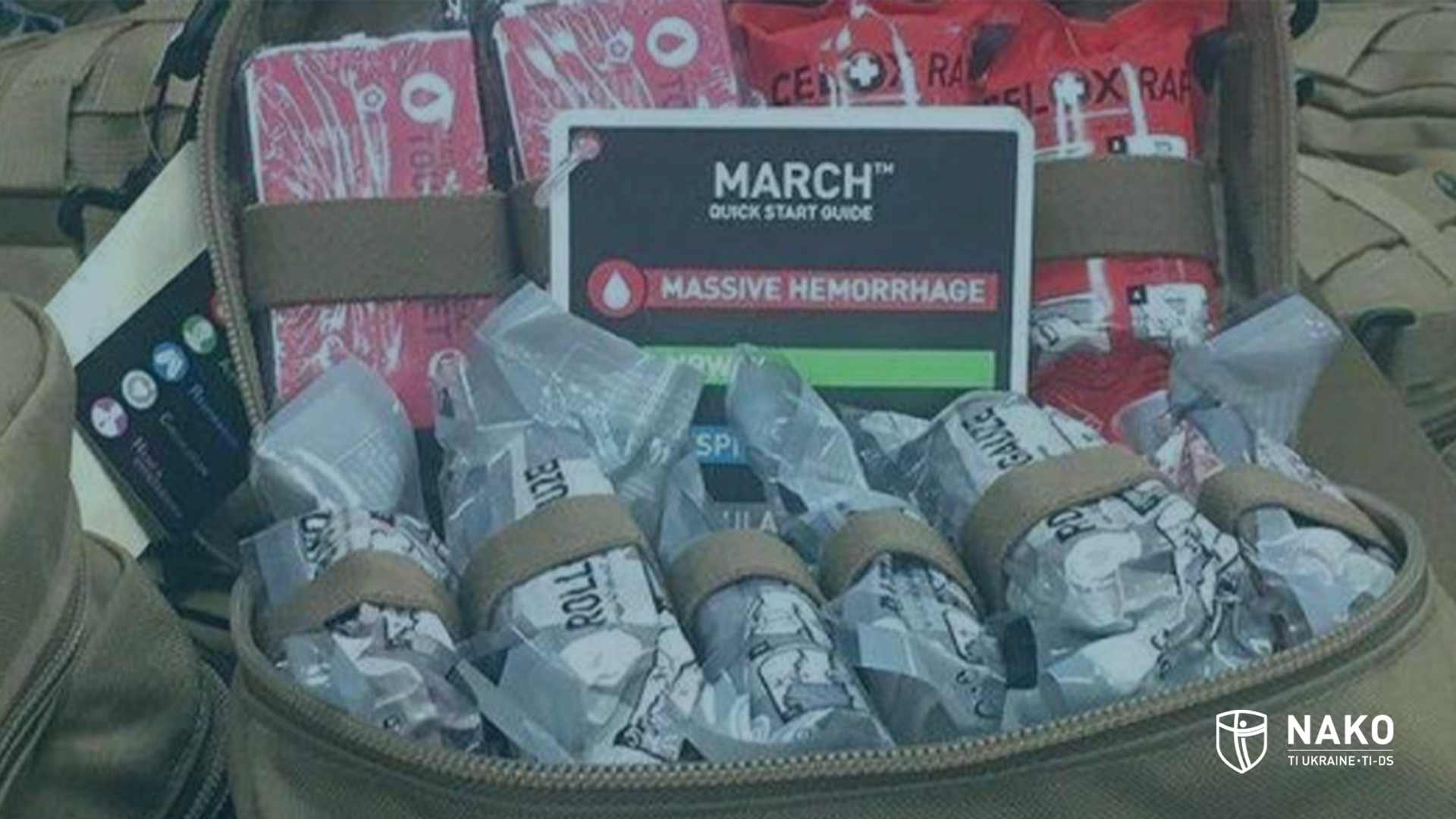
Members of the Armed Forces, paramedics and volunteers complain about the poor quality of the first aid kits soldiers receive at the front line.
Oksana Korchynska, a medical coordinator and volunteer, was among the first to raise the alarm, posting on social media that first aid kits were sent to the frontline, including Chinese-made tourniquets, are of low quality and simply break down.
The tourniquet samples sent for testing did not meet the standards, as their compression pressure dropped 53 mmHg and 130 mmHg within 2 hours. The standard is up to 50 mmHg. Instead, the Command of the Medical Forces of the Armed Forces of Ukraine reported that this information was inaccurate. In other words, the agency contradicts the results of the official test.
This situation received considerable publicity. Paramedics, volunteers, human rights defenders and civil society activists sent a public letter to the Minister of Defence Oleksiy Reznikov, the Minister of Internal Affairs Ihor Klymenko, the Commander-in-Chief of the Armed Forces Valeriy Zaluzhnyi and the Chief of the General Staff of the Armed Forces Serhiy Shaptala. The activists described the problems in the Armed Forces and asked to influence their solution.
Moreover, Solomiya Bobrovska, a member of the Ukrainian parliament, said that in 2023, the Medical Forces Command did not purchase tactical first aid kits for the Armed Forces, and no quality standards for first aid kits had been developed. Bobrovska summarised the accumulated problems, including the poor quality of tourniquets and the need for more verification of first aid kits for service members provided through international technical assistance.
The Command of the Medical Forces of the Armed Forces of Ukraine responded to the scandal by stating the General Staff. It says they have already managed to organise and improve the existing medical support system in accordance with wartime requirements. However, there are still problematic issues that require systemic solutions.
At the same time, this is not the first scandal related to medical procurement in the MoD. In 2015, the Ministry of Defence claimed that military medicine had been restored, although volunteers purchased first aid kits independently. "The ATO soldiers will receive 30,000 individual first aid kits," the Defence Ministry's military medical department assured. The department reported that the state has allocated UAH 367 million to the Ministry of Defence for medical supplies. Of this amount, 160 million was allocated for the purchase of medicines. As of the end of August, almost half of the funds allocated by the state had been used and distributed among military medical institutions, the Ministry's medical service leadership claimed. However, volunteers who helped soldiers on the front line said such statements were somewhat exaggerated.
In 2016, tourniquets in service with the USSR army were supposed to save Ukrainian soldiers. Volunteers were outraged by this purchase by the Ministry of Defence because instead of medical tourniquets used in most armies worldwide, the ministry purchased equipment that is almost impossible for a wounded person to apply on their own. The tender was not cancelled, and UAH 10 million was allocated from the budget.
So, the problems in the field of medical procurement do not date back to 2023 at all – it has been a systemic problem for years. And as we can see, this systemic problem is cumulative.
To minimise risks in the defence medical supply system, NAKO has developed several recommendations. We insist on professionalising procurement, for example, by transferring open procurement to a centralised procurement organisation. To ensure proper competition, more involvement of suppliers in tenders and a more precise definition of the requirements for the procurement item, the NAKO recommends improving the medical and technical requirements for the procurement item.
In addition, back in 2017, the NAKO experts provided recommendations to improve the system of international assistance, which, in particular, is used to offer Ukrainian defenders first aid kits. Thus, donor states were recommended to assist at the specific request of the Ukrainian side with the identified needs of the defence forces. In addition, we recommended the establishment of an appropriate focal point, effective control over MoD procurement, and assessing the extent to which it complies with NATO standards.