

Ukrainian citizenship will be given to military personnel – foreigners and stateless people.
On August 20, the Verkhovna Rada adopted the "Law of Ukraine On Amendments to Certain Laws of Ukraine Regarding the Legal Status of Foreigners and Stateless Persons Who Participate in the Protection of the Territorial Integrity and Inviolability of Ukraine."
Now, foreigners or stateless persons can obtain citizenship if they served in military service under a contract, even if their contract is terminated or they are dismissed from military service due to health reasons.
Also, representatives of these categories stay in the territory of Ukraine on legal grounds until they obtain a temporary residence permit. In addition, certain guarantees are provided for family members of such persons.
This law can solve some problems of the status of foreigners and stateless persons who, together with our citizens, choose the independence of Ukraine.
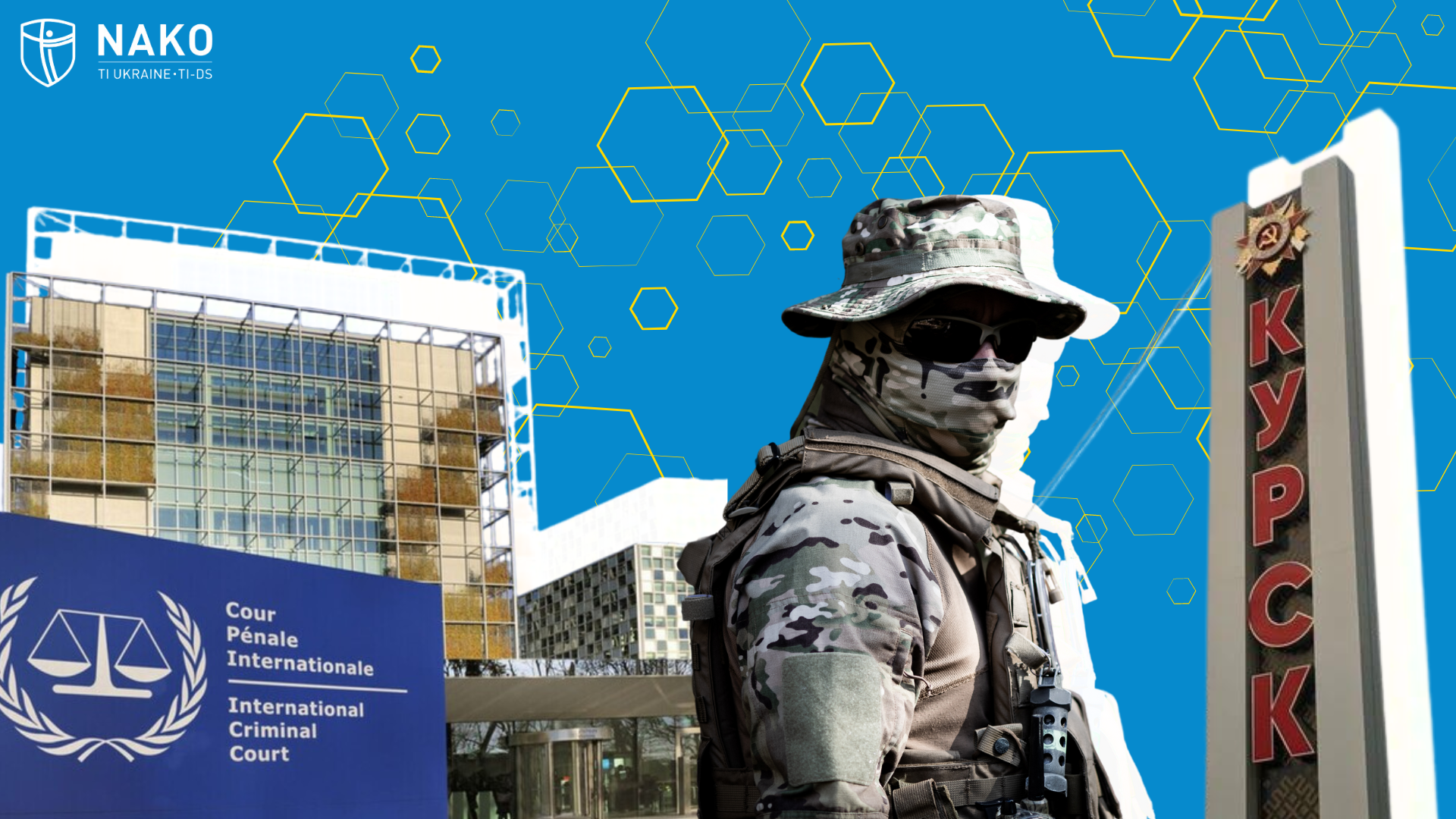
Social guarantees for the participants of the Kursk operation.
On August 20, the Verkhovna Rada adopted the Law "On Amendments to Article 3 of the Law of Ukraine "On Social and Legal Protection of Servicemen and Members of Their Families."
Military personnel who are currently in Kurshchyna now have the right to:
– monthly additional remuneration in the event of a combat mission;
– obtaining education at other higher educational institutions without separation from service;
– free travel;
– adequate pension provision;
– one-time cash benefit in case of death (death), disability or partial loss of working capacity of military personnel;
– indemnification of military personnel for moral and material damage.
Thanks to this law, the social rights of military personnel fighting on the territory of the aggressor state and military personnel fighting on the territory of Ukraine are fully realized. Until now, only military personnel fighting on the territory of Ukraine had these social rights.
Ukraine ratified the Rome Statute.
On August 21, the Verkhovna Rada of Ukraine approved the Law of Ukraine "On the Ratification of the Rome Statute of the International Criminal Court and its Amendments" No. 3909-IX
Key points of the ratification of the Rome Statute of the International Criminal Court (hereinafter – the ICC):
– the jurisdiction of the ICC extends to severe crimes;
– interaction with the International Court of Justice is carried out through diplomatic channels, the Office of the Prosecutor General (in matters of investigation and trial) and the Ministry of Justice of Ukraine (in matters of execution of decisions of the International Court of Justice);
– the annual membership fee of Ukraine for the functioning of the ISS will be 235,048 euros.
Ratification of the Rome Statute will help bring the perpetrators to justice for the most serious crimes (in particular, genocide, war crimes, and crimes against humanity) and will contribute to the implementation of domestic legislation into the EU legal system.
90 lawsuits and six guilty verdicts: the temporary investigative commission of the VRU submitted a report for a year of work
On August 6, a group of deputies (Tsabal Volodymyr, Oleksandr Sova, Oleksandr Kovalchuk), Yevtushok Serhiy, Moroz Volodymyr, Aryev Volodymyr, Kinzburska Victoria, Larin Serhiy, Pasichny Oleksandr, Leonov Oleksii, Aliksiichuk Oleksandr) I submitted a draft resolution on the report of the work of the Temporary Investigative Commission VRU on the investigation of possible violations of legislation in public procurement during martial law.
The commission submitted its report on violations for the period July 9, 2023, to July 5, 2024. According to the document, in the first half of the year, the commission processed about 100 purchases from 52 customers. In the second half of the year, the commission's work was focused on finding ways to solve problems that arose in the field of public procurement.
In the process of work, the commission identified the following problems:
– division of the procurement subject into parts so as not to use tenders;
– Form discriminatory requirements for procurement participants. And then, the predetermined participant wins.
– unjustified conclusion of direct contracts without competitive procedures.
Also, based on the materials of the commission's work, the following were presented in the interests of the state:
– 24 lawsuits for over UAH 1 billion — in 2024 by the Donetsk Regional Prosecutor's Office
– 66 lawsuits for UAH 3,731 million — during the period of martial law by the Zhytomyr Regional Prosecutor's Office
– 6 guilty verdicts against civil servants on official negligence in purchasing electricity and other energy carriers (for 2023-2024) by the Volyn Regional Prosecutor's Office.
Escort service for military personnel and their family members is being implemented in Ukraine.
On August 20, 2024, the Cabinet of Ministers of Ukraine adopted Resolution No. 948, "Some issues of implementing the activities of escort services for military personnel, non-commissioned and senior officers of the Civil Defense Service, police officers and their family members."
This resolution establishes an escort service for military personnel, members of the civil defense service, police officers and their family members at military units, military educational institutions, and health care institutions that are subordinate to military units;
The main areas of activity of the service:
– accompanying servicemen who have been injured (contusion, trauma, or maiming), illness, and communication with their family members;
– assistance in obtaining benefits for family members of dead (deceased), missing under special circumstances, or captured military personnel;
– ensuring the issuance of certificates confirming the status of a person;
– communication of escort services with state authorities and local self-government bodies to provide social support (help) to military personnel;
– provides advice to military personnel on the possibility of free prosthetics.
Bringing the function of protecting the rights of servicemen into a single, separate service will provide an opportunity to improve the standards of support for servicemen in the entire security and defense sector and implement state policy in this area centrally and according to a single standard.
New priority areas of digital transformation in defense for 2024-2026 were approved.
On August 2, the Cabinet of Ministers adopted Order No. 735-r, "Some issues of digital transformation," which defines the priority areas of digitization for 2024-2026. In the field of defense, it is planned, in particular:
– Create a state web portal and a mobile application for electronic services in the national security and defense field.
– To develop a system for accounting offenses in the Armed Forces.
– Launch a vehicle control system called "Pass 2.0".
– Implement a defense resource management system.
– Create a system for financial and economic management of military and other units.
According to NAKO experts, the centralization of sensitive information can lead to serious consequences if it leaks. However, this simplification of accounting and resource use will positively affect the effectiveness of strategic planning in the Armed Forces of Ukraine. The proposed innovations are also important in the future, as they aim to strengthen data transparency in the security and defense sector and offer an action plan for the near future in the priority sector of reforms. This will strengthen Ukraine's position during negotiations with international partners.
Demobilization for defenders who serve more than 36 and 12 months
At the beginning of August, people's deputies (Peter Poroshenko, Artur Gerasimov, Mykhailo Bondar, Maxim Savrasov, Pavlenko Rostyslav, Oleg Synyutka, Fedina Sofya, Iryna Gerashchenko, Volodymyr Aryev, Iryna Nikorak, Oleksiy Goncharenko, Ionova Maria), Volodymyr Vyatrovych, Mykola Knyazhytskyi, Yana Zinkevich, Ivanna Klympush-Tsintsadze, Maryana Bezugla) submitted draft law No. 11460, which proposes changes to some laws of Ukraine that should increase the motivation and protection of the rights of military personnel during martial law.
What exactly do they offer?
– Exemption from service for those who have served 36 months – of which 12 months were in combat.
– Exemption from mobilization for 12 months after discharge from military service based on a three-year term of service.
– Double cash payments to those who agree to serve after 36 months.
– Prohibition of transferring military personnel to another unit without their consent if they have chosen a specific unit for service.
– The right to travel abroad for certain categories of conscripts: in particular, people's deputies, persons with disabilities, parents of three or more children, single parents, persons released from captivity, and persons under 25 years of age.
– Full reservation of employees of NABU, State Emergency Service, and border service who participate in ensuring national security.
According to NAKO experts, specific provisions of the law are populist. Dismissal from the service of those who have served more than 36 months is impossible, in particular, because there is no one to replace those currently serving physically. And the proposal to double the payments to those who agree to serve after 36 months seems unrealistic too – there is no money in the budget. The transfer of troops to other units is currently the prerogative of their command because it is the command that decides where a person is most effective. If the serviceman disagrees with the transfer, he can file a lawsuit. Among the potential risks of the draft law is opening a border for more categories of men.
On August 20, the Verkhovna Rada adopted the "Law of Ukraine On Amendments to Certain Laws of Ukraine Regarding the Legal Status of Foreigners and Stateless Persons Who Participate in the Protection of the Territorial Integrity and Inviolability of Ukraine."
Now, foreigners or stateless persons can obtain citizenship if they served in military service under a contract, even if their contract is terminated or they are dismissed from military service due to health reasons.
Also, representatives of these categories stay in the territory of Ukraine on legal grounds until they obtain a temporary residence permit. In addition, certain guarantees are provided for family members of such persons.
This law can solve some problems of the status of foreigners and stateless persons who, together with our citizens, choose the independence of Ukraine.
Social guarantees for the participants of the Kursk operation.
On August 20, the Verkhovna Rada adopted the Law "On Amendments to Article 3 of the Law of Ukraine "On Social and Legal Protection of Servicemen and Members of Their Families."
Military personnel who are currently in Kurshchyna now have the right to:
– monthly additional remuneration in the event of a combat mission;
– obtaining education at other higher educational institutions without separation from service;
– free travel;
– adequate pension provision;
– one-time cash benefit in case of death (death), disability or partial loss of working capacity of military personnel;
– indemnification of military personnel for moral and material damage.
Thanks to this law, the social rights of military personnel fighting on the territory of the aggressor state and military personnel fighting on the territory of Ukraine are fully realized. Until now, only military personnel fighting on the territory of Ukraine had these social rights.
Ukraine ratified the Rome Statute.
On August 21, the Verkhovna Rada of Ukraine approved the Law of Ukraine "On the Ratification of the Rome Statute of the International Criminal Court and its Amendments" No. 3909-IX
Key points of the ratification of the Rome Statute of the International Criminal Court (hereinafter – the ICC):
– the jurisdiction of the ICC extends to severe crimes;
– interaction with the International Court of Justice is carried out through diplomatic channels, the Office of the Prosecutor General (in matters of investigation and trial) and the Ministry of Justice of Ukraine (in matters of execution of decisions of the International Court of Justice);
– the annual membership fee of Ukraine for the functioning of the ISS will be 235,048 euros.
Ratification of the Rome Statute will help bring the perpetrators to justice for the most serious crimes (in particular, genocide, war crimes, and crimes against humanity) and will contribute to the implementation of domestic legislation into the EU legal system.
90 lawsuits and six guilty verdicts: the temporary investigative commission of the VRU submitted a report for a year of work
On August 6, a group of deputies (Tsabal Volodymyr, Oleksandr Sova, Oleksandr Kovalchuk), Yevtushok Serhiy, Moroz Volodymyr, Aryev Volodymyr, Kinzburska Victoria, Larin Serhiy, Pasichny Oleksandr, Leonov Oleksii, Aliksiichuk Oleksandr) I submitted a draft resolution on the report of the work of the Temporary Investigative Commission VRU on the investigation of possible violations of legislation in public procurement during martial law.
The commission submitted its report on violations for the period July 9, 2023, to July 5, 2024. According to the document, in the first half of the year, the commission processed about 100 purchases from 52 customers. In the second half of the year, the commission's work was focused on finding ways to solve problems that arose in the field of public procurement.
In the process of work, the commission identified the following problems:
– division of the procurement subject into parts so as not to use tenders;
– Form discriminatory requirements for procurement participants. And then, the predetermined participant wins.
– unjustified conclusion of direct contracts without competitive procedures.
Also, based on the materials of the commission's work, the following were presented in the interests of the state:
– 24 lawsuits for over UAH 1 billion — in 2024 by the Donetsk Regional Prosecutor's Office
– 66 lawsuits for UAH 3,731 million — during the period of martial law by the Zhytomyr Regional Prosecutor's Office
– 6 guilty verdicts against civil servants on official negligence in purchasing electricity and other energy carriers (for 2023-2024) by the Volyn Regional Prosecutor's Office.
Escort service for military personnel and their family members is being implemented in Ukraine.
On August 20, 2024, the Cabinet of Ministers of Ukraine adopted Resolution No. 948, "Some issues of implementing the activities of escort services for military personnel, non-commissioned and senior officers of the Civil Defense Service, police officers and their family members."
This resolution establishes an escort service for military personnel, members of the civil defense service, police officers and their family members at military units, military educational institutions, and health care institutions that are subordinate to military units;
The main areas of activity of the service:
– accompanying servicemen who have been injured (contusion, trauma, or maiming), illness, and communication with their family members;
– assistance in obtaining benefits for family members of dead (deceased), missing under special circumstances, or captured military personnel;
– ensuring the issuance of certificates confirming the status of a person;
– communication of escort services with state authorities and local self-government bodies to provide social support (help) to military personnel;
– provides advice to military personnel on the possibility of free prosthetics.
Bringing the function of protecting the rights of servicemen into a single, separate service will provide an opportunity to improve the standards of support for servicemen in the entire security and defense sector and implement state policy in this area centrally and according to a single standard.
New priority areas of digital transformation in defense for 2024-2026 were approved.
On August 2, the Cabinet of Ministers adopted Order No. 735-r, "Some issues of digital transformation," which defines the priority areas of digitization for 2024-2026. In the field of defense, it is planned, in particular:
– Create a state web portal and a mobile application for electronic services in the national security and defense field.
– To develop a system for accounting offenses in the Armed Forces.
– Launch a vehicle control system called "Pass 2.0".
– Implement a defense resource management system.
– Create a system for financial and economic management of military and other units.
According to NAKO experts, the centralization of sensitive information can lead to serious consequences if it leaks. However, this simplification of accounting and resource use will positively affect the effectiveness of strategic planning in the Armed Forces of Ukraine. The proposed innovations are also important in the future, as they aim to strengthen data transparency in the security and defense sector and offer an action plan for the near future in the priority sector of reforms. This will strengthen Ukraine's position during negotiations with international partners.
Demobilization for defenders who serve more than 36 and 12 months
At the beginning of August, people's deputies (Peter Poroshenko, Artur Gerasimov, Mykhailo Bondar, Maxim Savrasov, Pavlenko Rostyslav, Oleg Synyutka, Fedina Sofya, Iryna Gerashchenko, Volodymyr Aryev, Iryna Nikorak, Oleksiy Goncharenko, Ionova Maria), Volodymyr Vyatrovych, Mykola Knyazhytskyi, Yana Zinkevich, Ivanna Klympush-Tsintsadze, Maryana Bezugla) submitted draft law No. 11460, which proposes changes to some laws of Ukraine that should increase the motivation and protection of the rights of military personnel during martial law.
What exactly do they offer?
– Exemption from service for those who have served 36 months – of which 12 months were in combat.
– Exemption from mobilization for 12 months after discharge from military service based on a three-year term of service.
– Double cash payments to those who agree to serve after 36 months.
– Prohibition of transferring military personnel to another unit without their consent if they have chosen a specific unit for service.
– The right to travel abroad for certain categories of conscripts: in particular, people's deputies, persons with disabilities, parents of three or more children, single parents, persons released from captivity, and persons under 25 years of age.
– Full reservation of employees of NABU, State Emergency Service, and border service who participate in ensuring national security.
According to NAKO experts, specific provisions of the law are populist. Dismissal from the service of those who have served more than 36 months is impossible, in particular, because there is no one to replace those currently serving physically. And the proposal to double the payments to those who agree to serve after 36 months seems unrealistic too – there is no money in the budget. The transfer of troops to other units is currently the prerogative of their command because it is the command that decides where a person is most effective. If the serviceman disagrees with the transfer, he can file a lawsuit. Among the potential risks of the draft law is opening a border for more categories of men.