


Sanctions evasion resembles the mythical Hydra: as soon as one scheme is disrupted, new ones emerge in its place. As a result, countering sanctions evasion becomes a continuous process. How can it be made faster and more effective? This was the focus of a Defence Talks discussion held by NAKO on 21 July 2026. During the event, we presented the study “Follow the Address”: Shared Offices, Shell Companies, and Microelectronics Supply Chains to Russia.
The discussion featured:
- Bohdan Chumak, representative of the Sanctions Policy Department of the Ministry of Foreign Affairs of Ukraine;
- Viktoriia Vyshnivska, Senior Researcher at NAKO;
- Olena Davlikanova, Senior Analyst at the Sahaidachnyi Security Center;
- Yurii Poita, Senior Associate Analyst at the Mercator Institute for China Studies (MERICS);
- Oleksandr Moiseienko, Deputy Editor-in-Chief of United24 Media.
Bohdan Chumak outlined the priorities of the upcoming EU sanctions packages. The restrictions will primarily target Russia’s shadow fleet, supplies of foreign microelectronics to Russia, efforts to counter sanctions evasion, and additional measures targeting Russian LNG.
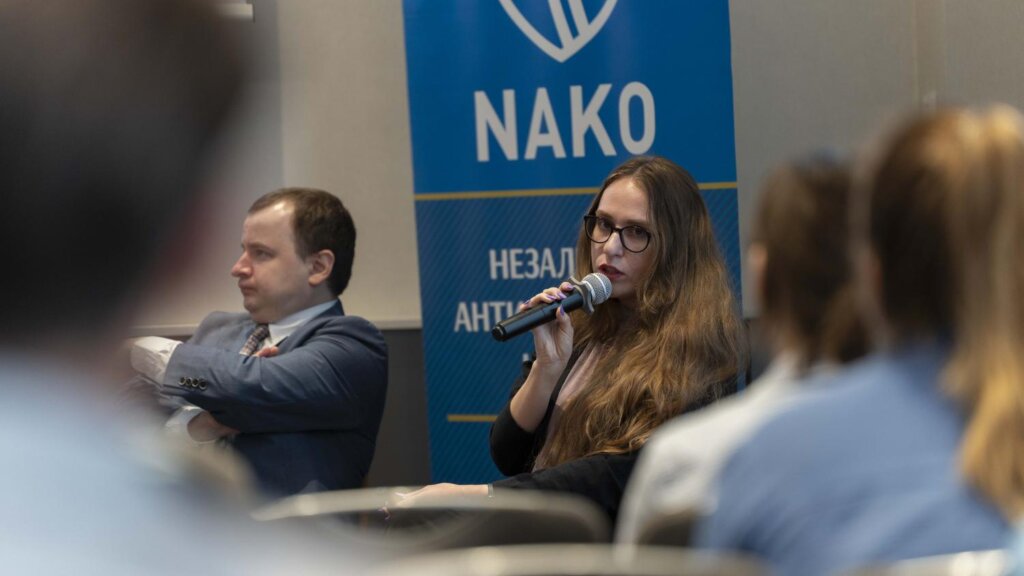
The study “Follow the Address”: Shared Offices, Shell Companies, and Microelectronics Supply Chains to Russia was presented by Viktoriia Vyshnivska, Senior Researcher at NAKO. By analysing 180,000 customs declarations, our experts identified 1,800 commercial addresses. These addresses are used by companies supplying microelectronics to Russia in circumvention of sanctions.
According to Vyshnivska, companies change and disappear, while addresses remain more stable. They continue to be used by other suppliers that have not yet been sanctioned. “NAKO’s research shows that sanctions policy, export controls, and compliance should in fact take spatial risk into account. A physical address can and should serve as an independent risk indicator,” Vyshnivska stressed.
Vyshnivska also noted that the study is unique due to its exceptionally complex methodology. The most challenging stage was cleaning, verifying, and normalising the data obtained from customs declarations. In particular, NAKO experts corrected numerous typos and machine translation errors in company names. They also determined whether different spellings of Chinese addresses and business centre names in fact referred to the same location.
Bohdan Chumak added that errors in company names and addresses may be introduced deliberately. This makes it more difficult to identify companies and collect evidence needed for sanctions. For example, documentation on vessels in Russia’s shadow fleet deliberately contains inaccuracies to conceal sanctions evasion schemes.
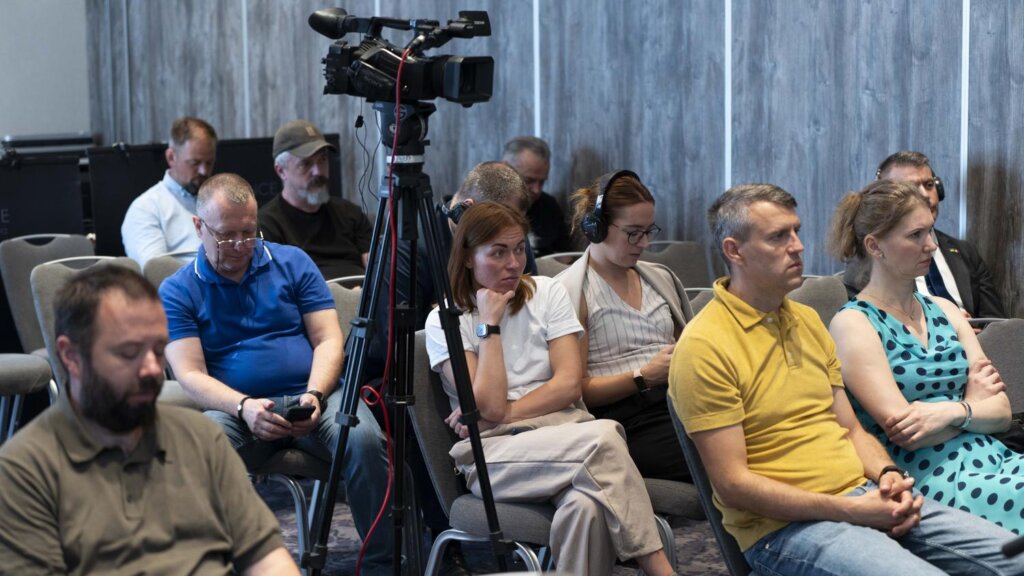
Olena Davlikanova, Senior Analyst at the Sahaidachnyi Security Center and editor of NAKO’s study on cooperation among authoritarian regimes, stressed that Russia’s aggression against Ukraine should not be viewed as a “local problem,” but rather as part of a global challenge. Russia, China, Iran, and North Korea are coordinating their actions ever more closely. It is precisely this cooperation that enables the Kremlin to continue the war.
“With less than 4% of global GDP, Russia would not have been able to sustain the war for so long without China’s support. Today, nearly 90% of dual-use components reach Russia through China. This is therefore not only a matter for Ukraine—it is about how authoritarian regimes are jointly seeking to reshape the global order,” Davlikanova said.
Yurii Poita, Senior Associate Analyst at MERICS, noted that China is deliberately supporting Russia’s war machine. Whereas previously this mainly involved individual electronic components, it now includes engines, communications systems, and navigation equipment. According to the expert, awareness within the EU of the threat posed by China–Russia cooperation is gradually increasing. However, the sanctions response remains insufficient. “Each sanctions package may include one, two, or several Chinese companies. But this is not a blow to the Chinese economy and does not change China’s policy,” he said.
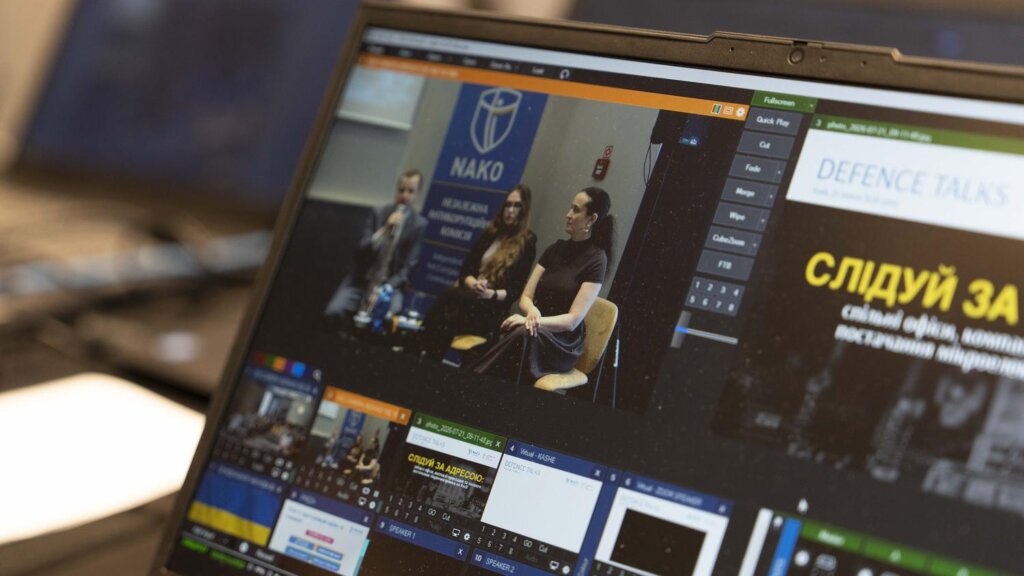
Oleksandr Moiseienko, Deputy Editor-in-Chief of United24 Media, shared his experience of investigative journalism in countering sanctions evasion. According to him, there is sufficient information and evidence to expose networks of intermediary companies, but coordinated action by partner states is lacking. “If sanctions were imposed on these companies on a large scale, it would actually stop supplies—at least for a certain period. They would create new companies, but those could also be targeted. The real problem is that today there is no global strategy for addressing this,” he said.
The presentation of the study was supported by the International Renaissance Foundation.