

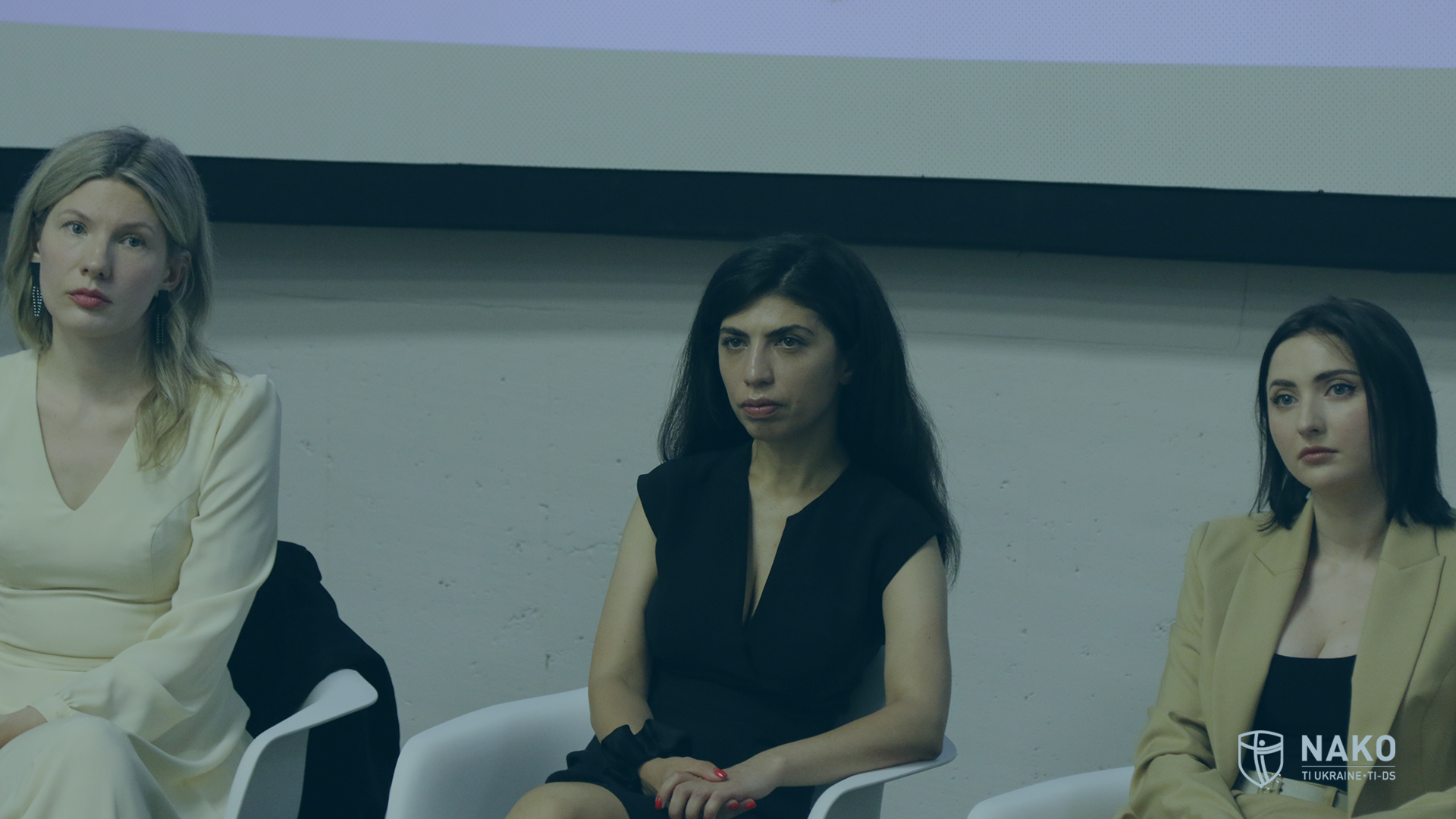
Experts analysed over 2,000 parts from six planes, five Su aircraft and one MiG, based on information from government and military sources. On June 13, 2024, the Independent Anti-Corruption Commission (NAKO) and other experts researching Russian weapons and shaping sanctions policy against Russia presented the report ”Wings of War: Analysing the Western Components in Russian Fighter Jets.
The analysis shows that Russian fighter jets use components from at least 244 companies in 22 countries. Most of these components (64%) are imported from the USA. The rest are from Japan, Switzerland, Germany, France, Great Britain, Taiwan, and the Netherlands.
Western microelectronics goods mainly reach Russia through third countries; at least 58 major military enterprises operate under this scheme. Thus, Russia uses the experience of other authoritarian regimes, particularly Iran, which has been under sanctions for many years.
«Just like Iran, Russia has built a network of critical technology suppliers around the world who very professionally, very often criminally supply Russia with the necessary goods. These legal entities, individuals, and diplomats who work in different countries can quickly register companies, move between countries, and organize transactions. So partner countries must work ahead to help us stop the Russian war machine", claimed Olena Tregub, NAKO’s executive director.

The analysis showed that in 2023, Russia spent at least 4.2 billion dollars on electronic components that could be used for military purposes. Almost 55% of the components identified in Russian fighter jets are critical for the Russian military industry. According to Agiya Zagrebelska, the head of the direction of minimization of corruption risks in the sanctions policy of the National Agency on Corruption Prevention (NACP), this flow of components continues through various supply chains.
"Every shipment you see in this report is a coffin for Ukrainians. This is not a number but a coffin with a specific surname, with children, a husband or wife, and parents. It's a life", – she emphasized.
Zagrebelska stressed that new sanctions must be introduced in the future, and countries must demand stricter implementation, monitoring, and control of these sanctions. Therefore, Ukraine and its international partners must act together, exchange information and experience, and react faster.
"Sanctions team" – this is how Vladyslav Vlasiuk, adviser to the head of the Presidential Office and secretary of the Yermak-McFaul international sanctions group, called the group of expert organizations investigating Russian weapons, helping to introduce new sanctions. And everyone's role is important here. So Vlasiuk gave the Main Directorate of Intelligence (HUR) as an example, as the intelligence managed to obtain a sample of Russian chemical weapons under fire in the Kharkiv direction.
«The key thing we manage to do is, firstly, to convince our partners, and secondly, to provide enough information, ideas, and evidence. The third is to put pressure on partners so that they can accept certain sanctions. Sometimes, it is necessary to praise – because their governments are under pressure. Because sanctions against Russia often have consequences for the economies of these countries. This, too, must be understood and respected", – Vlasiuk noted.
Olena Bilousova, a consultant on strategic projects at the Kyiv School of Economics who investigated the origin of Russian weapons components within the Yermak-McFaul international sanctions group, called on partner countries to work on extending and introducing new sanctions. According to her estimates, the average duration of the sanctions’ effectiveness is six months. After this period, Russia found workarounds, and the restrictions lost their relevance. Olena urged that new effective measures should be taken in advance while the old ones are in action.

«After introducing sanctions in 2022, there was initially a large decrease in trade volume in critical components. But after that, we saw recovery very quickly, sometime in August 2022. Russian imports returned to the volumes recorded at the beginning of the invasion. There are no such sanctions we would introduce and expect them to work forever."
Mariia Berlinska, the founder of the Centre for Air Reconnaissance, emphasized the need to uncover and introduce accountability mechanisms for companies that continue to provide Russia with a supply base. Several hundred companies worldwide transfer Western products to Russia through third countries.
"Sometime after we uncover them, of course, the FSB starts creating a new network. But we are gaining time for Ukraine and the lives of the Ukrainian people. Because Western technologies are killing Ukrainians", – Berlinska concluded.
Denys Hutyk, adviser to the Economic Security Council of Ukraine, emphasized the importance of corporate compliance in the context of sanctions policy. In his opinion, reputational risks, in particular, are very acutely felt by financial institutions – they can refuse, for example, a loan to a "doubtful" client. This will directly affect his solvency and ability to produce this or that product.
Hutyk is confident that "The results of the US sanctions show that compliance becomes serious when banks feel high risks from sanctions. We have not seen such serious measures in the manufacturing and distributor sector, especially dual-purpose goods. Corporate compliance with standards established at the legislative level and accountability for violations of these standards is a universal tool currently lacking”.
The event's moderator, Hanna Hopko, co-founder of the International Center for Ukrainian Victory and former Chairwoman of the Verkhovna Rada Committee on Foreign Affairs, also emphasized the importance of cooperation with partners.
"It is very important for us to understand that in 2014, it was Russia's war against Ukraine, and in 2024, it will be a war between the axis of authoritarian regimes – Russia, China, North Korea, Iran. That is why Ukraine and its allies should build a systemic game to get ahead. Make the sanctions hellish – and we will see complete economic isolation", – Hopko is convinced.
NAKO investigates the weapons used by the Russians and their components (including supply chains). The organization's experts analysed the components of Iskander and Kalibr missiles, as well as Iranian Shahed in cooperation with the Wall Street Journal. Based on that data, NAKO experts submitted suggestions to the EU sanctions list. As a result of two years – 2022-2023 – 27 Russian arms manufacturers were included in the 9th package of sanctions of the European Commission, and two more companies – in the 10th.
The presentation of the report was attended by numerous representatives from partner country embassies, civil society organizations such as the Anti-Corruption Action Center, Dignitas, and the Center for Ukrainian Victory, as well as Ukrainian and foreign media.
This report was compiled with the support of the International Renaissance Foundation. Its content is the exclusive responsibility of NAKO and does not necessarily reflect the views of the International Renaissance Foundation.


