

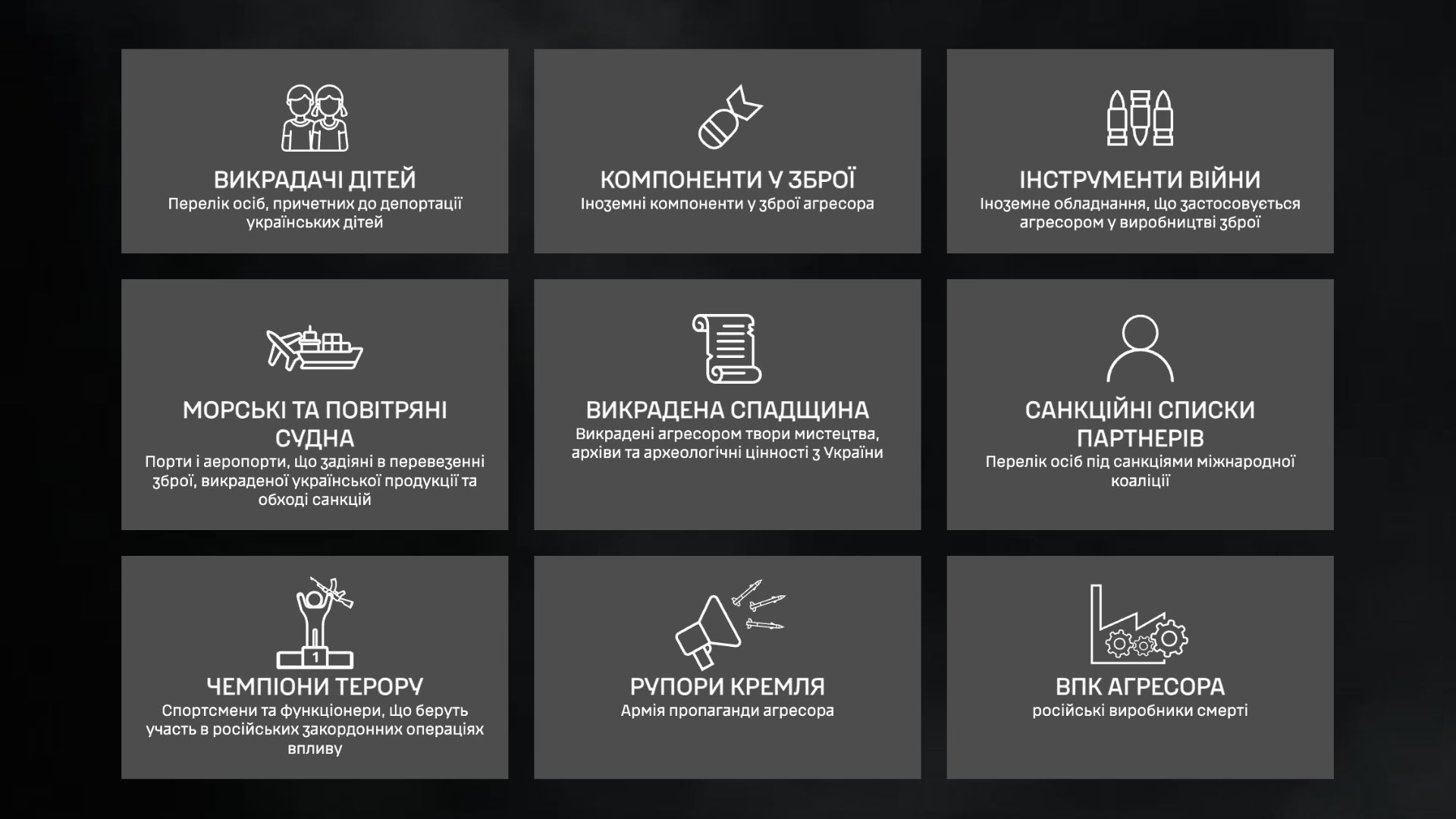
In June 2024, the Defence Intelligence of Ukraine launched the War&Sanctions portal to counter Russia's attempts to evade sanctions and continue the war against Ukraine. In fact, the portal is an open database of sponsors and supporters of Russia's aggression. 'This data helps develop long-term strategies to influence or counter Russian crimes,' explained Anatolii Astafiev, a representative of the Defence Intelligence of Ukraine.
As of May 2025, the resource contains nine sections with up-to-date information on:
- over 4.6 thousand foreign components in 164 samples of Russian weapons;
- 1180 foreign machines used by Russia in the production of weapons;
- 817 ships involved in sanctions evasion, transportation of weapons and stolen Ukrainian products;
- 243 enterprises of the Russian military-industrial complex;
- sanctions lists of Ukraine's partner countries;
- 316 individuals and 164 legal entities involved in the deportation of Ukrainian children;
- 996 objects of Ukrainian cultural heritage stolen or destroyed by Russia;
- 110 Russian propagandists;
- 149 athletes used by Russia as a tool for propaganda and sanctions evasion.
Each section contains documents, photos and facts that confirm Russia's war crimes. This makes the portal a source of verified information for investigative journalists, international partners and businesses.
According to Andrii Yusov, a representative of the Defence Intelligence of Ukraine, the War&Sanctions portal provides tools to combat countries and companies that violate international law and knowingly or unknowingly help Russia wage war against Ukraine. But for these tools to work, he said, it will take the joint, coordinated work of diplomats, journalists, civil society activists and government agencies.
NAKO analysts also use the portal's data in their work. 'When preparing analytical reports, we worked with the Components in Weapons section and checked the information with data from other partners. Sometimes the data on the portal was more accurate, or there was a different photo. There is also unique data that is not available in open sources. For example, I found information about some foreign machines in Russian factories,' says Marta Kharynovych, NAKO junior researcher.