

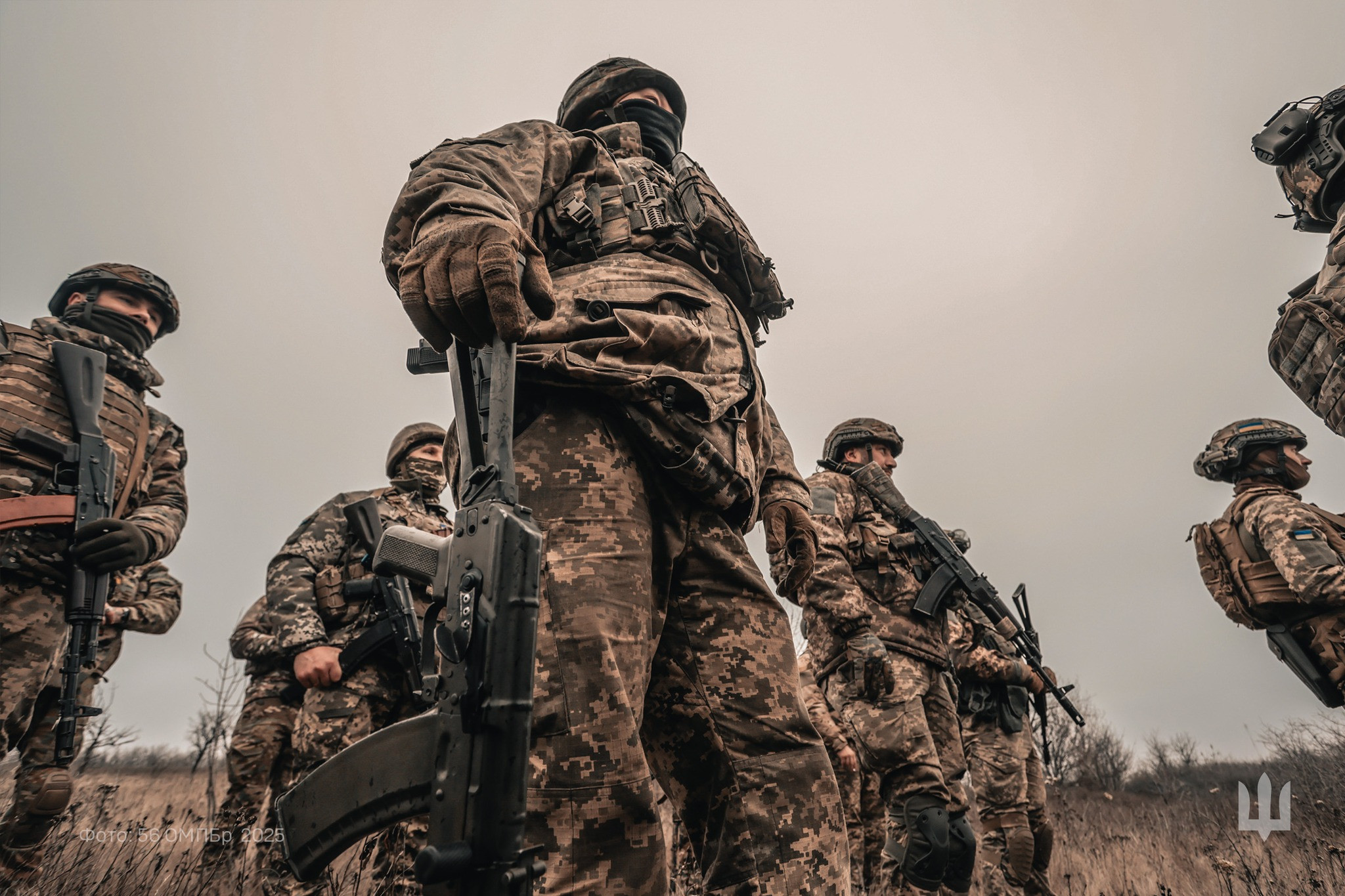
What was 2025 like for Ukraine’s defense sphere? A country at war was building up the capacity of its defense industry, while at the same time feeling the consequences of long-standing, unresolved management problems. The year 2025 was also marked by corruption scandals.
On the days when authority was being transferred from Minister of Defense Denys Shmyhal to the new minister, Mykhailo Fedorov, NAKO outlines the main achievements and crises in the sector over the past year, as well as the challenges facing the Ministry of Defense in 2026.
Positive developments
In response to growing needs, Ukraine’s defense-industrial complex was forced to expand its capabilities. Over recent years, as stated by Minister of Defense Denys Shmyhal, it demonstrated growth from USD 1 billion to USD 35 billion.
According to the results of 2025, enterprises of JSC “Ukrainian Defense Industry” alone—the country’s key state defense concern—increased the production of weapons and military equipment by one and a half times compared to the previous year.
In 2025, the Ministry of Defense approved for use more than 1,300 new models of weapons and military equipment of Ukrainian production. This is a quarter more than last year, the ministry reported.
The Ministry of Defense also significantly strengthened the digitalization of processes. A key success was the launch of DOT-chain Defence, an electronic marketplace that enabled military units to significantly simplify and speed up the procurement of drones. Thanks to DOT-chain Defence, the military has already purchased 225,000 strike assets worth more than UAH 10 billion.
In addition, the Ministry of Defense finally began operating a logistics management system based on SAP in line with NATO standards. More than 1,000 units are already working in this system. As a result, supply timelines have been reduced from weeks to days.
In 2025, also saw the launch of the “Impulse” personnel accounting system—thanks to it, more than 200 military units are already working with up-to-date data without paper logs.
Last year, the Ministry for Strategic Industries was dissolved. Despite the fact that the country indeed needed to focus on developing the defense-industrial complex, the creation of this ministry was never unequivocally justified. It operated for five years minus one day—from July 22, 2020 to July 21, 2025. In its analytical report, NAKO had earlier noted that creating a new ministerial body to manage defense-industry reform could complicate the institutional system, create risks of overlapping mandates, and increase challenges in policy coordination.
Now, despite numerous problems and the corrupt legacy that the Ministry of Defense inherited along with the enterprises of the defense-industrial complex (including the “Ukrainian Defense Industry” concern), one of the “positive” consequences of dissolving the separate ministry is that one of the actors in the rule-making process—often generating initiatives and legislative changes—has disappeared. These changes frequently did not align with, or directly contradicted, the positions and priorities of the Ministry of Defense. Therefore, the liquidation of the Ministry for Strategic Industries should contribute to greater coherence and consistency of state policy in the defense-industry sphere.
With the dissolution of the Ministry for Strategic Industries, the practice of signing contracts for volumes that enterprises were unable to fulfill also ceased. In particular, such a practice led to a scandal involving the supply of more than 20,000 substandard mines to the front.
Negative phenomena
The beginning of last year was marked by a scandal over the replacement of the head of the Defense Procurement Agency, Maryna Bezrukova. The Ministry of Defense, led at the time by Minister Rustem Umerov, accused Bezrukova of failing to meet delivery schedules to the front, while the head of the agency criticized the ministry for effectively blocking the agency’s work.
As a result, due to the change in leadership and the fact that the General Staff of the Armed Forces of Ukraine did not timely provide the procurement agency with a list of required weapons, in January and February 2025 the Defense Procurement Agency carried out almost no weapons contracting. As a result, part of the suppliers was lost.
In April, the Ministry of Defense announced the merger of the Ministry’s procurement agencies—the Defense Procurement Agency and the State Rear Operator. NAKO experts repeatedly criticized this decision because the merger process itself could negatively affect procurement processes. Unfortunately, these concerns were borne out, as part of the staff resigned from the State Rear Operator, while others were transferred to the Defense Procurement Agency, where employees combined functions across the two agencies. For example, the head of the food procurement direction changed three times within two months. It is currently unknown how effectively the agency will operate after the staff reduction and how much money will be saved as a result.
In the summer, the State Rear Operator was unable for two months to reach a common understanding with representatives of the light industry. The subject of the dispute was the indicative price of goods. Manufacturers considered it understated in favor of importers. Due to this dispute, a significant portion of procurements failed. The conflict was resolved only after public attention and the intervention of the Public Anti-Corruption Council at the Ministry of Defense.
Two additional scandals should also be mentioned as symptomatic. The first involved attempts by some manufacturers to substitute the fabric used in winter jackets with a supposedly equivalent one—this was stopped by the Ministry of Defense. The second concerned the procurement of body armor from companies affiliated with Timur Mindich, who is suspected of organizing a criminal group. Specifically for these companies, the State Rear Operator expanded qualification criteria and also accepted documents for verification from a company that was not a party to the contract.
Challenges
Regardless of the achievements of the previous minister or the best characteristics of the successor, the Ministry of Defense has problems that will continue to generate scandals.
- Since Minister Mykhailo Fedorov received a task from the president to increase drone production, he will have to address the issue that UAVs are currently procured by specific names rather than by technical characteristics. This entails high risks of corruption and lobbying. Overall, the National Agency for the Prevention of Corruption identified 19 corruption risks in the procurement of UAVs and electronic warfare systems that need to be mitigated.
- As for other procurements carried out by the Defense Procurement Agency as the legal successor to the State Rear Operator, the agency can currently arbitrarily apply qualification criteria for admitting bidders. This effectively creates a corruption risk of manual regulation of potential participants.
- Another challenge is the approval of technical specifications and the verification of control samples of goods—the Ministry of Defense has been unable to approve this procedure for three months already. This delay may affect new bidders by complicating their ability to obtain actual admission to tenders—certificates of conformity.
- It is also unclear on what principles the supervisory board of the new agency will be completed and whether this will happen by the end of January, as promised.
- The persistent shortage of state budget funds may lead to delays in the payment of monetary allowances to servicemen.
- The lack of internal funds also prevents the full-scale launch of production by Ukrainian arms manufacturers. Therefore, for several years they have been demanding the return of arms exports, which could replenish the budget. However, organizing this process is currently significantly complicated due to risks of monopolization and favoritism in access to the list of exporters.
Both last year and in 2026, the Ministry of Defense has faced and will continue to face unprecedented challenges—as the defense ministry of a country at war, and as a largely over-bureaucratized, unreformed structure with which the ministry entered the full-scale invasion. Despite these constraints, Ukraine has demonstrated a unique capacity for resistance, and the defense system has maintained functionality and resilience. The future effectiveness of Ukraine’s defense will largely depend on whether the Ministry of Defense can transform into a more flexible, responsive, transparent, and accountable institution capable of making rapid decisions, managing resources effectively, and responding to the constantly evolving challenges of war.
Photo by 56th Motorized Brigade